Teacher Activists

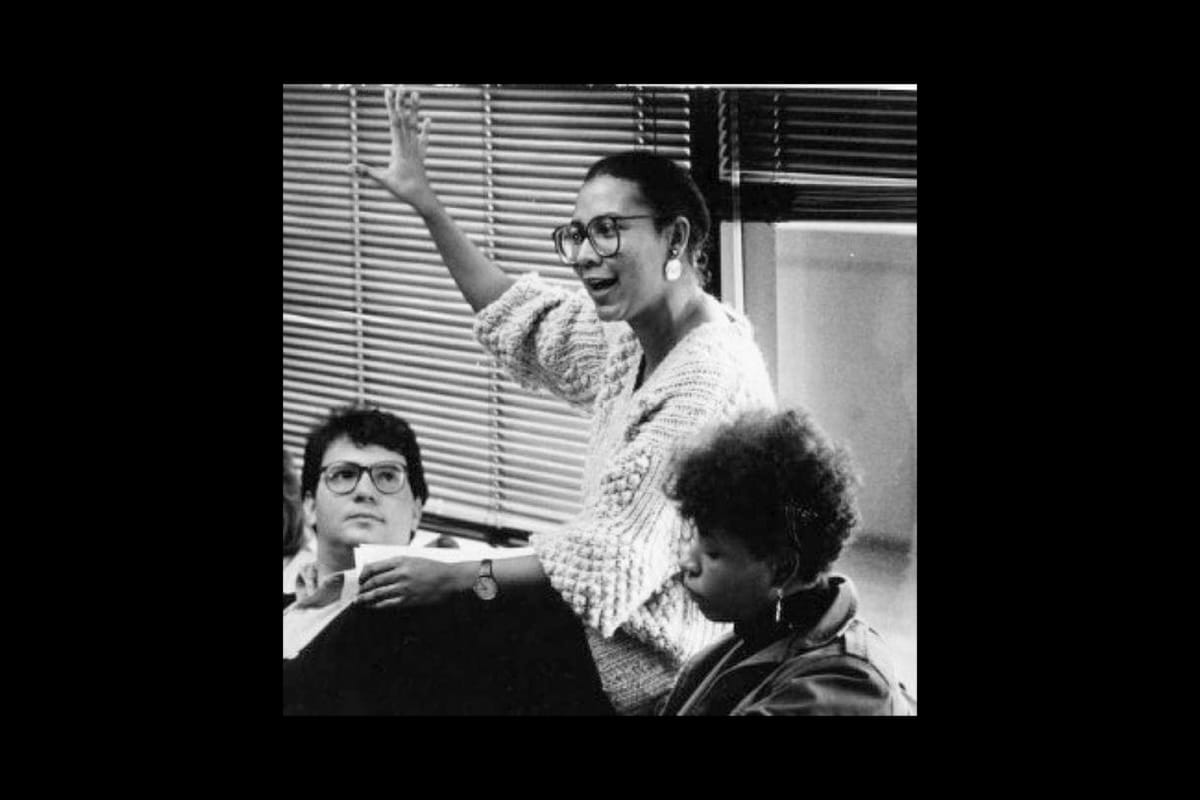
With a new semester quickly approaching, I’m in the (familiar) place of rethinking everything I’ve ever done in the classroom and questioning whether or not my teaching adds any value to my students' lives. Fortunately, in times like these, I have a few excellent examples of teacher activists whose work restores my sense of purpose.

Myles Horton (1905-1990) serves as a model of activist teaching centered on collective learning. Raised in rural Tennessee, he attended Cumberland University and then New York City’s Union Theological Seminary “to try to find out how to get social justice and love together.” (The Long Haul, 32) In his book, The Long Haul: An Autobiography (1997), he credits Union for helping to develop his activism. He writes:
I had discovered a big smorgasbord of ideas and activities to sample: I went to Catholic churches; synagogues; Muslim meetings. I attended workers’ education classes and spent hours listening and discussing politics at Union Square, where Communists, anarchists and socialists gathered. I went to union halls and strike rallies. I wanted to learn all the things I could and test them against my beliefs and figure out if they would be useful when I went back to Tennessee. (36)
As he continued to spend time in various communities, he came to understand:
If people are in trouble, if people are suffering and exploited and want to get out from under the heel of oppression, if they have hope that it can be done, if they can see a path that leads to a solution, a path that makes sense to them and is consistent with their beliefs and their experience, then they’ll move. But it must be a path that they’ve started clearing. They’ve got to know the direction in which they are going and have a general idea of the kind of society they’d like to have. If they don’t have hope, they don’t even look for a path. They look for somebody else to do it for them. (44)
While Horton is describing what he sees as the necessary conditions for community activism, his words help me to situate my role in the classroom. My job is not simply to convey knowledge or tell students what they need to do. Instead, my job is to offer hope and a setting that welcomes new ideas about where we as a society might go. I’m not saying this is easy, but having a clear direction is clarifying and helps me to think creatively about how to create those possibilities.
In 1932, Myles combined his interests in activism and education more concretely by establishing the Highlander Folk School. In his notes from the time, he reflects:
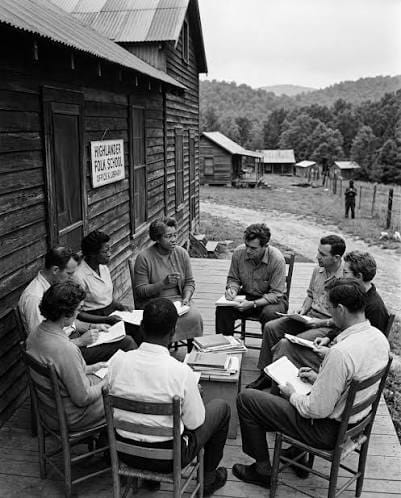
I would like to see a school where young men and young women will have close contact with teachers, will learn how to take their place intelligently in a changing world. In a few months, free from credits and examinations, utilizing only such methods as individual requirements called for…it is hoped that by a stimulating presentation of material and study of actual situations, the students will be able to make decisions for themselves and act on the basis of an enlightened judgment. (56)
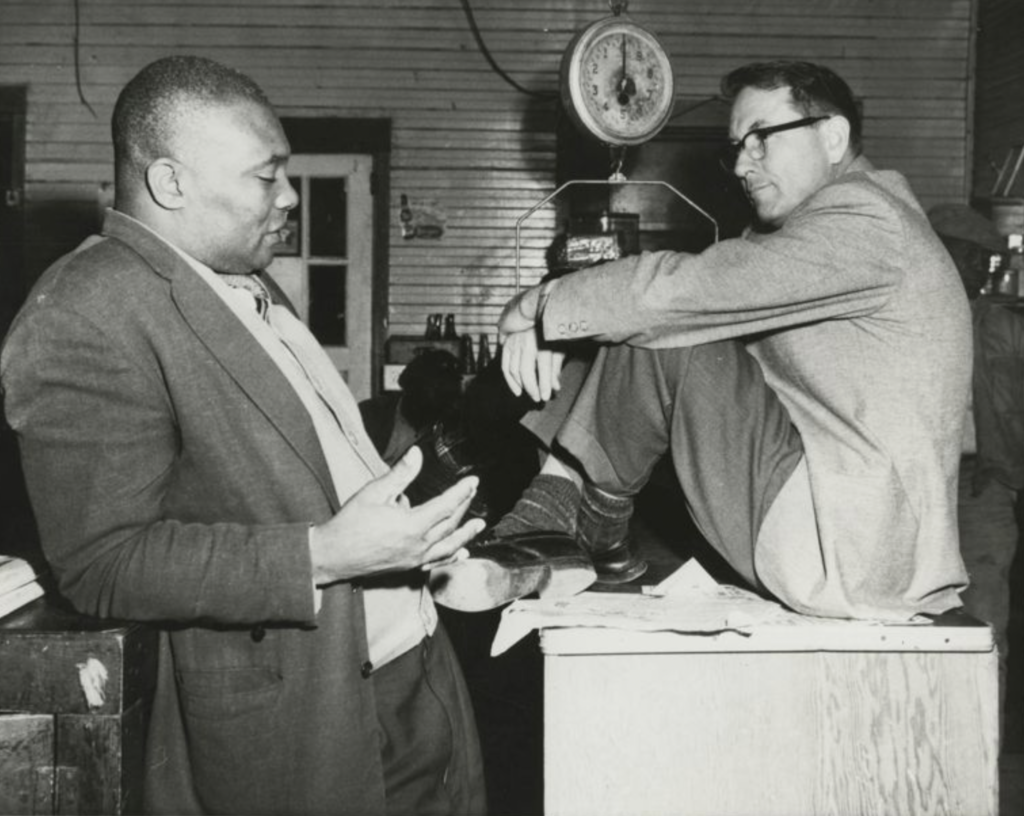
Working within two of the biggest social movements of the 1950s and 1960s, the industrial union movement and the civil rights movement, Highlander led programs and workshops for members of the Committee for Industrial Organization (CIO), Student Nonviolent Coordinating Committee (SNCC), Southern Christian Leadership Conference (SCLC), and the Poor People’s Campaign. The activists who participated in Highlander programs include Septima Clark, Fanny Lou Hamer, Esau Jenkins, Dr. Martin Luther King, Jr., and Rosa Parks. While Horton listened to the students and shared his experiences, he always left it up to the individuals and/or groups to determine their next steps. As he emphasizes, “Education is what happens to the other person, not what comes out of the mouth of the educator.” (131)
Scholar and activist Helen Lewis acknowledges Horton’s pedagogical development at Highlander. She recalls, “Myles calls it a ‘two-eyed’ theory of teaching. He keeps one eye on where people are, and one eye on where they can be—forever pushing, making them uncomfortable, stretching their minds, helping them grow in their understanding and critical consciousness.” (xx)
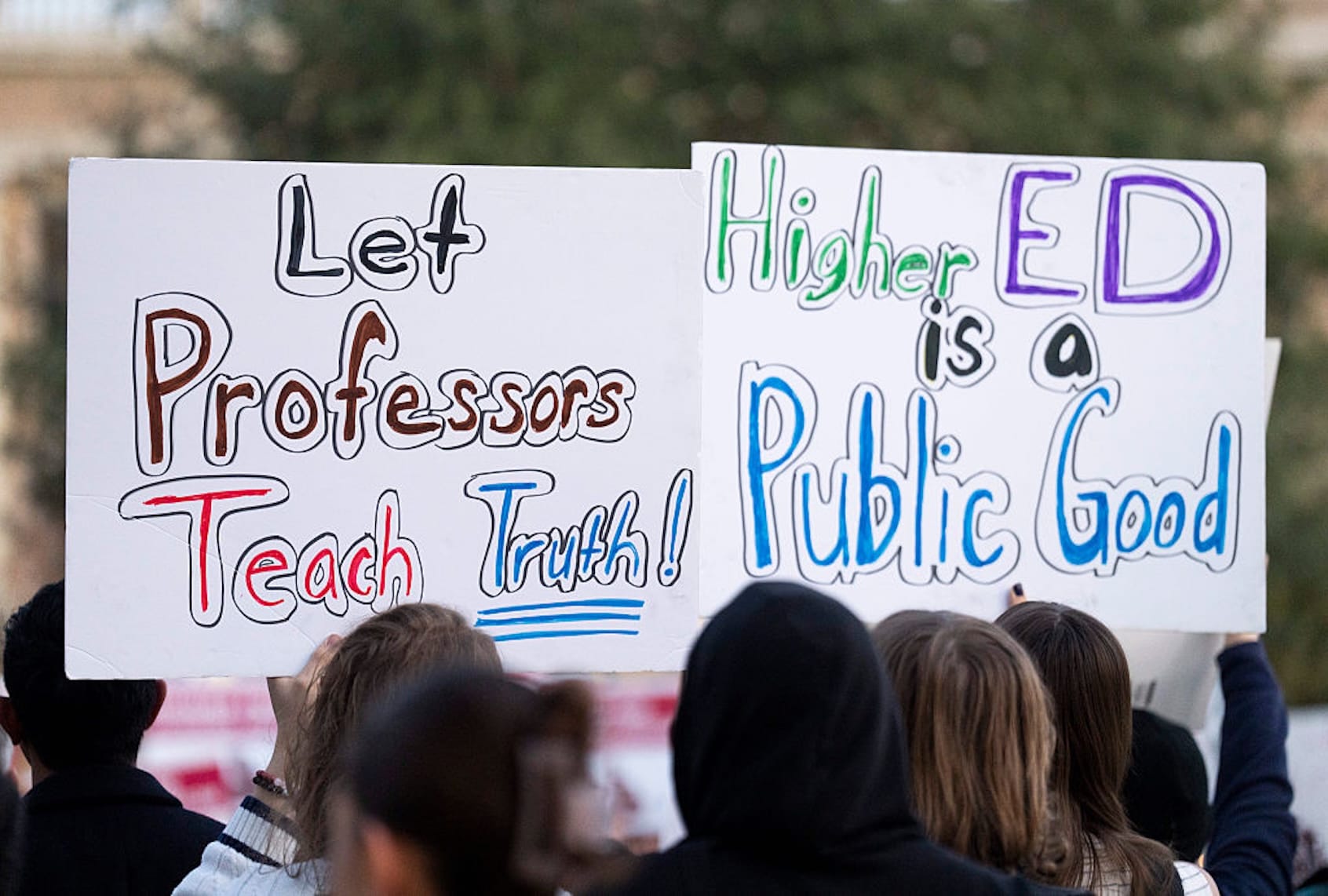
While I agree that this approach accurately describes teaching at its best, it is also the method that is increasingly being criticized by right-wing politicians. The educational system in the United States is steadily being attacked by those who believe that our society needs to move away from diversity and debate, instead returning to a “classical education” which, in their minds, equates to representing the political interests of the state in the classroom. Yet, as Bradford Vivian argues in a 2024 Time article, “the idea that teachers ought to be free to teach their specialties unobstructed and that students should be free to learn what they want is integral to ideals of classical education dating back centuries.”
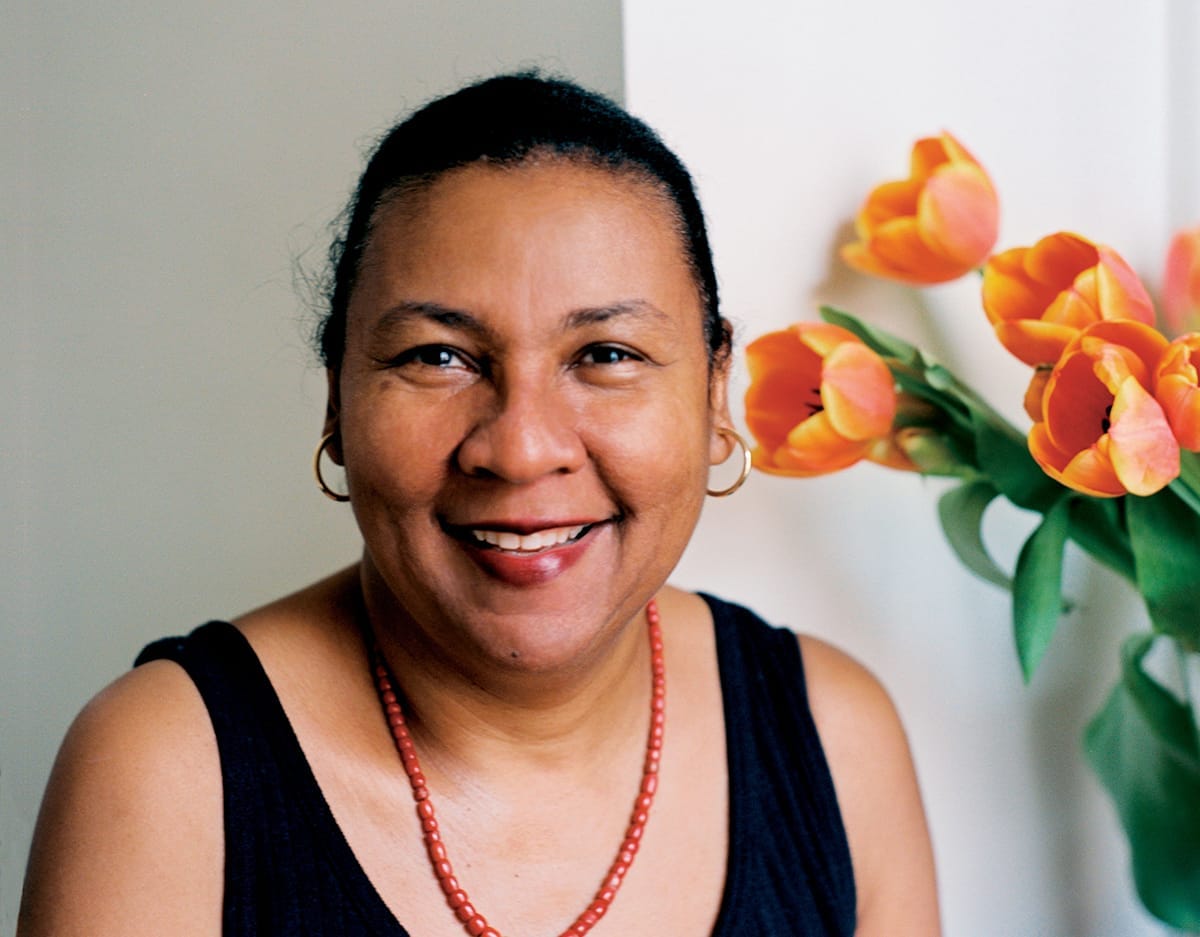
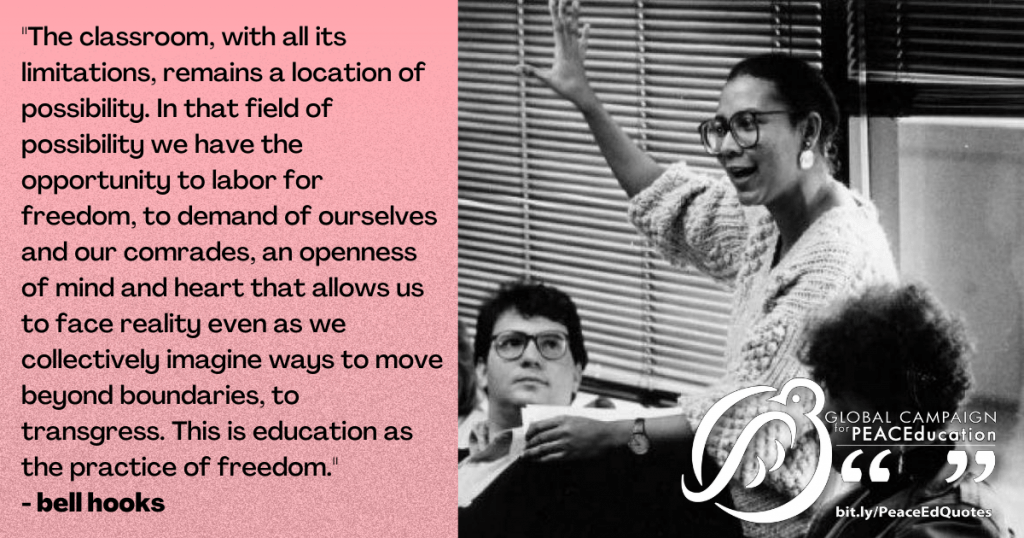
This brings me to my second role model. bell hooks (1952-2021) grew up in Hopkinsville, Kentucky, and after attending Stanford University, the University of Wisconsin–Madison, and UC Santa Cruz, became an activist, professor, and prolific writer of feminist theory. (National Women’s History Museum) Perhaps most famous for her book All About Love: New Visions, which explores the intentional practices she argues constitute “love,” hooks also wrote extensively about ways to engage students in the classroom.
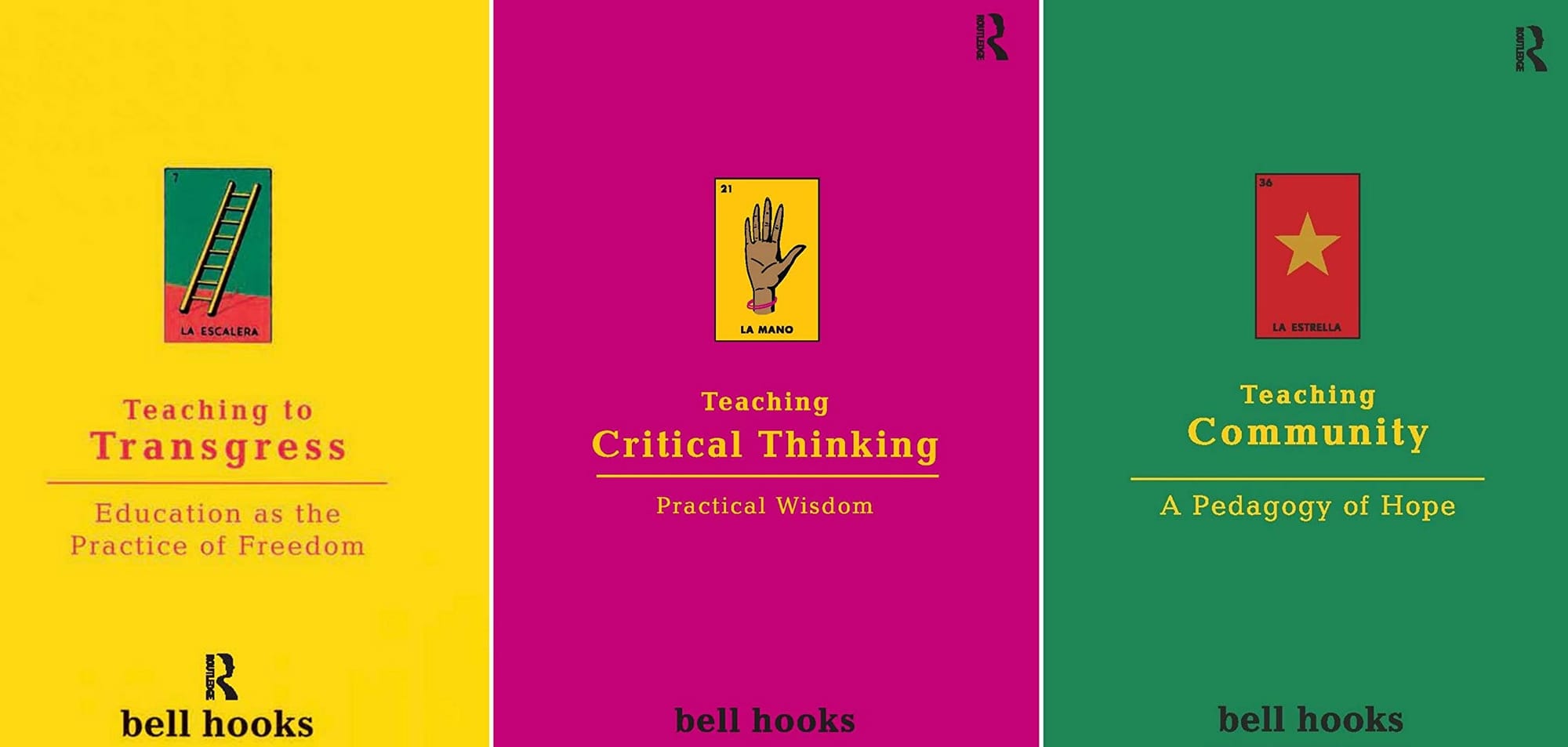
In Teaching to Transgress. Education as the practice of freedom (1994), hooks describes her vision for incorporating “excitement” into the learning process. She writes:
To enter classroom settings in colleges and universities with the will to share the desire to encourage excitement, was to transgress. Not only did it require movement beyond accepted boundaries, but excitement could not be generated without a full recognition of the fact that there could never be an absolute set agenda governing teaching practices. (7)
Rather than relying on the professor to be entertaining while the students sit as silent vessels collecting knowledge, hooks argues that it takes “collective effort” to create a positive learning environment. (8) She encourages professors to be vulnerable with their students, sharing not only their own personal experiences in relation to the content but also their own process for critically working through questions raised by the material. By modeling “ways of knowing with habits of being,” professors can help to create a more inclusive and collaborative classroom that encourages students to join the conversations. (43)
hooks helps me to (re)consider how I am engaging with my students each semester. Am I willing to do and/or share the same things I’m asking them to do and/or share? Do I take time to evaluate how they are grappling with the material we’re covering at the moment and to disclose my own challenges with interpreting the text? Do I make efforts to help every student feel seen, included, and encouraged to ask questions and articulate criticisms? These are high standards for teaching, and I appreciate being reminded by hooks to regularly check in with myself and my students about them.
Like Horton, hooks devotes a lot of time toward discussions of hope. In Teaching Community: A Pedagogy of Hope (2004), she argues, “When we only name the problem, when we state complaint without a constructive focus on resolution, we take away hope.” (xiv) In other words, offering a long list of societal ills to students does not take much work. The role of a professor is to move beyond cataloging problems to engaging students in conversations that center on possible solutions. Empowering students to think outside the box, to challenge the status quo, and to consider new ways of being is central to education.
Her work also directly challenges current critiques of diversity, equity, and inclusion efforts within higher education. The heart of any transformative classroom, she contends, is based on establishing trust between students and with the professor. She asserts:
Creating trust usually means finding out what it is we have in common as well as what separates us and makes us different. Lots of people fear encountering difference because they think that honestly naming it will lead to conflict. The truth is our denial of the reality of difference has created ongoing conflict for everyone. (109)
Only when we can identify what privileges we are each bringing to the table, and how those backgrounds influence our ideas of self and society, can we truly start to engage with others toward a common good. hooks carries this theme through into Teaching Critical Thinking: Practical Wisdom (2010). She reasons that creating dialogue that is inclusive of students’ different experiences helps to foster deeper understandings that do not try to eliminate conflict but rather work within it. She suggests, “When we teach our students that there is safety in learning to cope with conflict, with differences of thought and opinion, we prepare their minds for radical openings.” (88) And this, more than anything, helps to prepare them for the real world.
As I prepare to enter another set of classrooms with a combination of new and familiar faces, may I keep the lessons of Horton and hooks close at hand. May we all continue to work toward listening to each other, accepting our differences, and supporting one another in raising questions, sharing thoughts, and developing new ideas.
Learn More:
- For more on the Highlander Folk School, visit the Student Nonviolent Coordinating Committee (SNCC) Digital Gateway
- To learn more about the educational work that SNCC carried out in the 1960s, see 60 Years Later, Freedom Schools Are Still Radical—and Necessary
- For more on the work of bell hooks, check out this episode of She Builds Podcast.