Letter Writing

In the fall of 2020, I saw a call on my social media feed for pen pals. Rachel Syme, a journalist based in New York, developed #Penpalooza as a free way to connect people from around the world who felt isolated during the pandemic.
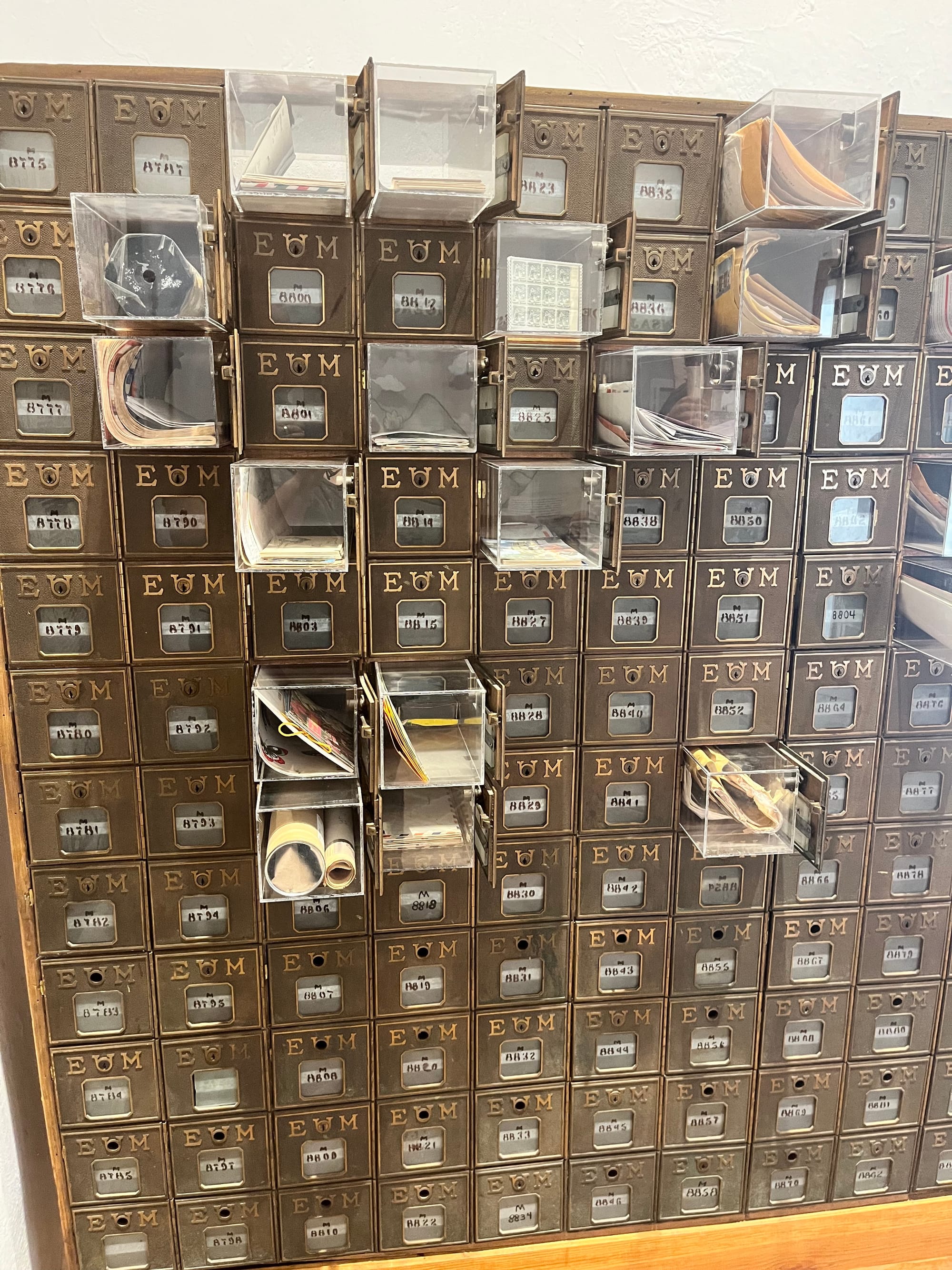
I loved the idea of receiving snail mail as a way to bring new stories, ideas, and experiences into our family bubble without relying on more screen time. I immediately signed up for multiple pen pals and it didn’t take long to start exchanging small envelopes filled with tea bags, recipes, playlists, and personal reflections.
As Syme recalls:
Within a month, the exchange had three thousand members, and by the end of the year, more than fifteen thousand people were taking part in the experiment. The list spanned over forty countries, including Switzerland, Australia, South Africa, Singapore, Greece, India, Lebanon, Argentina, the Netherlands, and the Philippines. The pen pal pairings were totally random, but the algorithm kept generating uncanny matches. One woman was paired with another woman from the tiny town where she grew up. Another woman studying to become an immigration lawyer was paired with a five-decade veteran of the field. One member who had canceled a much-anticipated trip to Paris due to the pandemic ended up with a Parisian pen pal (again, totally by chance) who sent letters filled with Polaroids of the city. (Introduction/Dear Reader)
I’ve stayed in touch with a few of my OG pen pals from 2020 and also made a few new connections along the way. While I don’t think #Penpalooza is still connecting letter writers, Syme does seasonally provide the free matching service through her Instagram account. But this was just the start of Syme’s influence in expanding letter writing in my world.
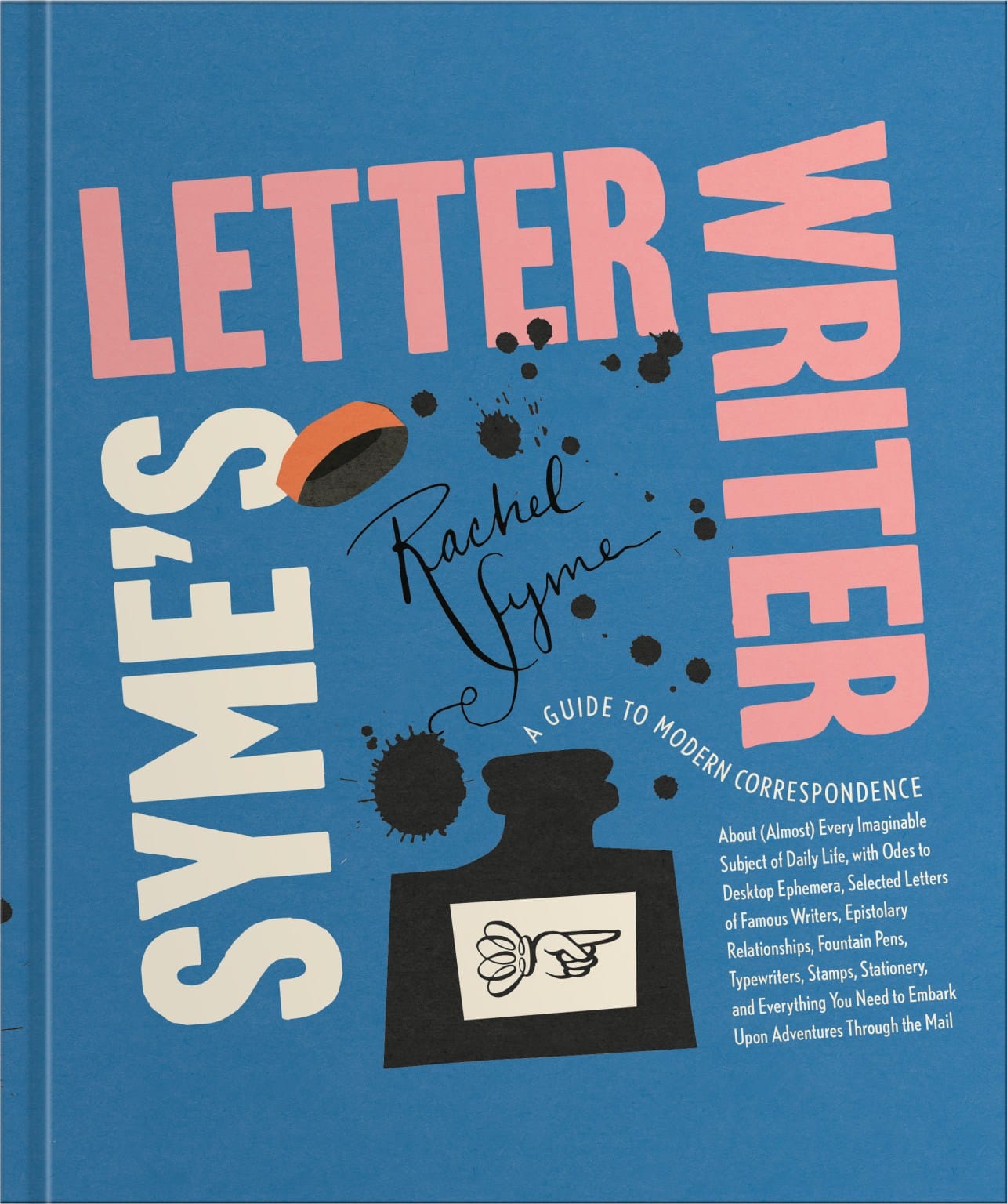
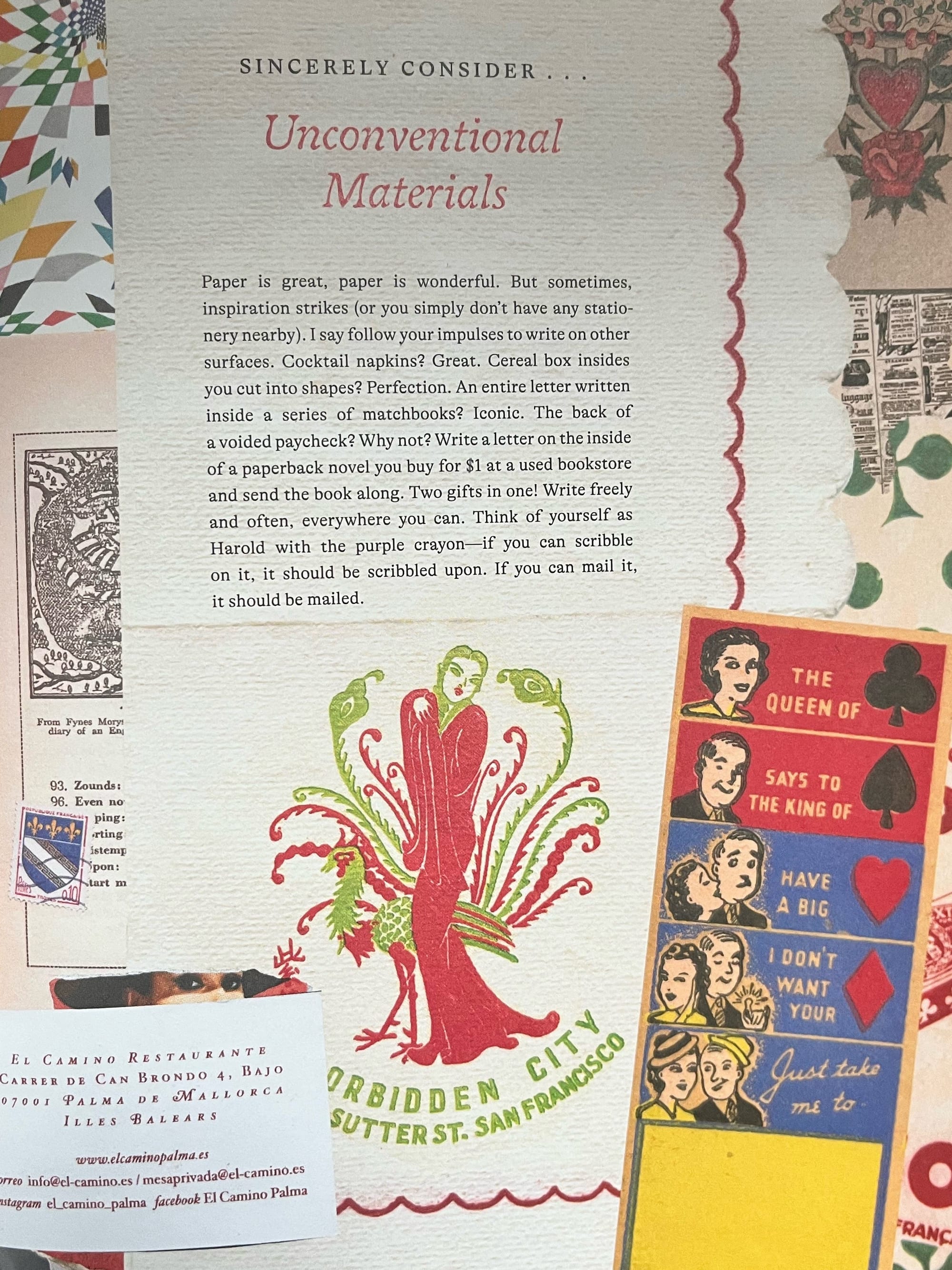
Last year, she published Syme's Letter Writer: A Guide to Modern Correspondence About (Almost) Every Imaginable Subject of Daily Life, with Odes to Desktop Ephemera and Selected Letters of Famous Writers. I love this book not only for the author’s introspection on developing #Penpalooza but also for her insights into the history of correspondence, gorgeous page layouts framed by bits and bobs related to mail, tips for writing letters in a variety of contexts, and quotes from famous pen pals.
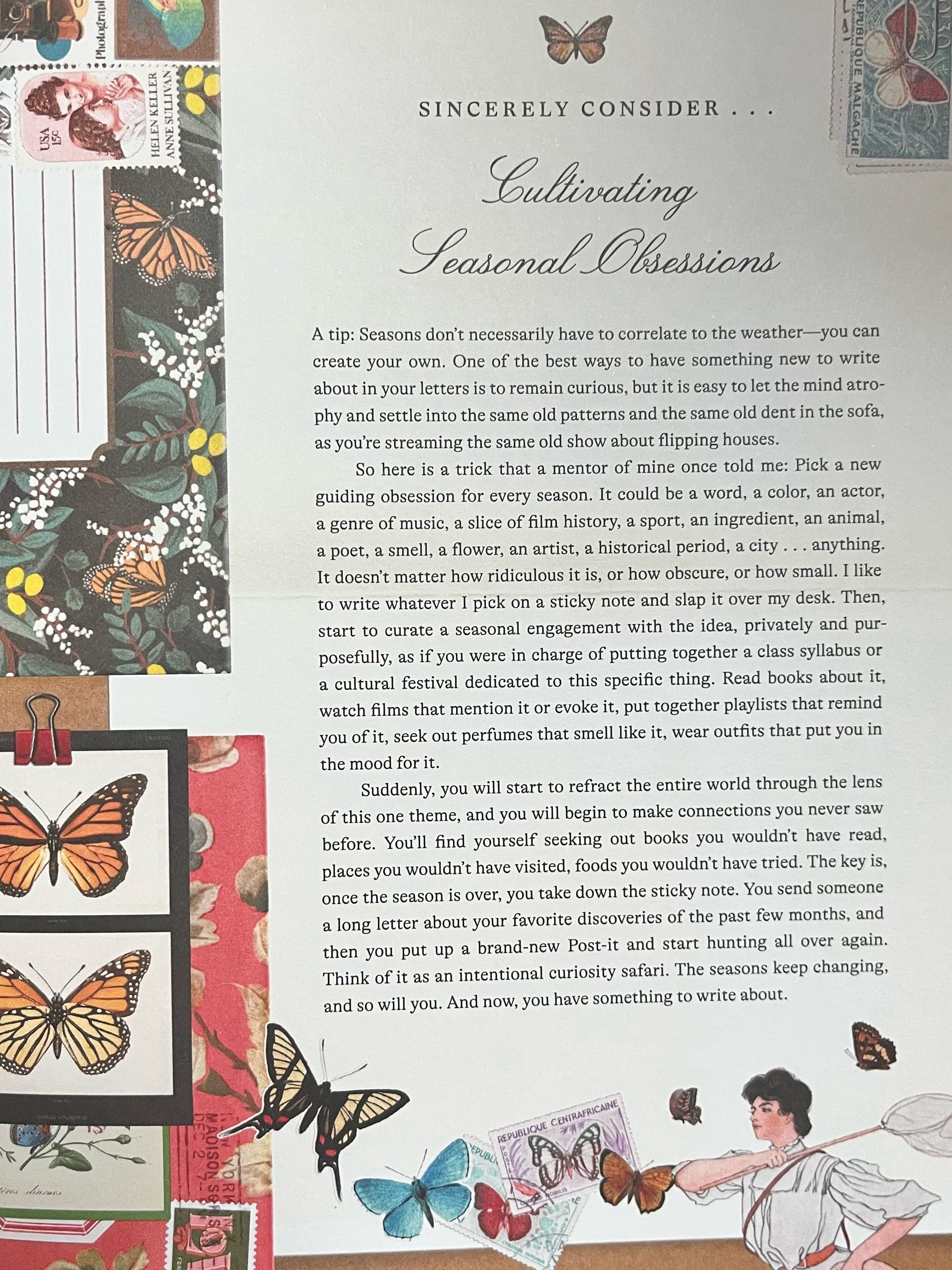
Syme describes her longstanding love for published letter collections like Dear Scott, Dearest Zelda: The Love Letters of F. Scott and Zelda Fitzgerald and What There Is To Say We Have Said: The Correspondence of Eudora Welty and William Maxwell. She relates:
What I loved about reading the correspondences was the way they revealed their author’s private worlds without feeling quite as transgressive as peering into someone’s diary. You write a letter for an audience—though a very small one—and it’s the rare act that is both performative and intimate at the same time. Reading letter collections, you gain entrée into a writer’s most focused prose. You see how they write when they aim their words like an arrow directly at someone else; how they elicit sympathy, how they seduce, how they commiserate, how they console, how they flirt, how they rage, how they charm. (Introduction/Dear Reader)
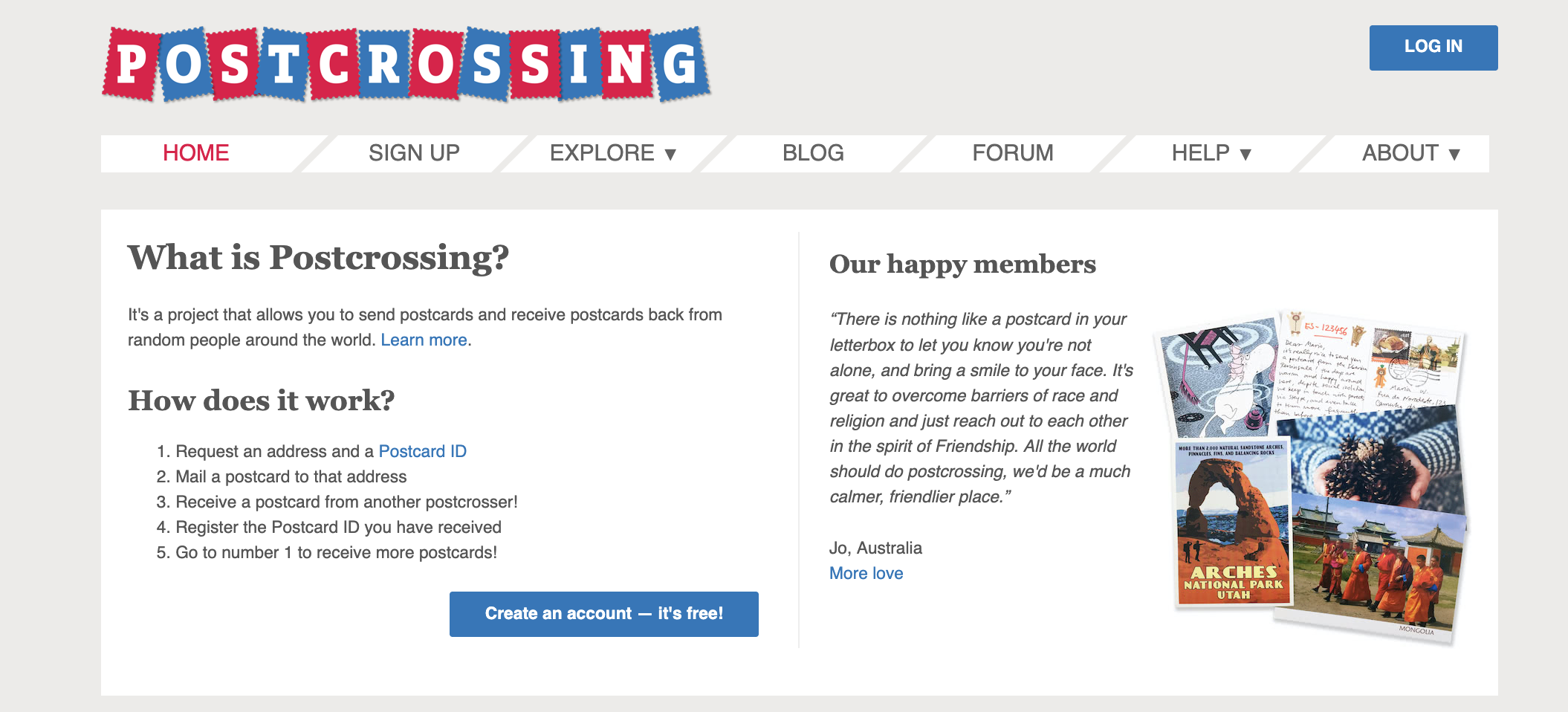
Through Syme, I also learned about Postcrossing, a service that allows you to send and receive postcards from people in the U.S. and/or internationally (depending on how much you want to spend on stamps). In 2021, I opted for the international route and loved receiving cards from Portugal, Finland, China, Russia, France, Germany, Taiwan, and more. Their online system shares an address with you and then tracks the delivery of your postcard. Once someone receives their card, your address is shared with someone who will then send a card to you. In my first year, I sent and received 33 postcards. The content varied from a short poem or inspirational quote to a list of favorites (music, movies, books) or a family recipe. These were ways to connect on a smaller scale—less personal diary, more carefully curated, meaningful lines. And I enjoyed watching my postcards make it safely across the globe and knowing that one was also headed to me. The site still connects people and tracks postcards. Check them out!
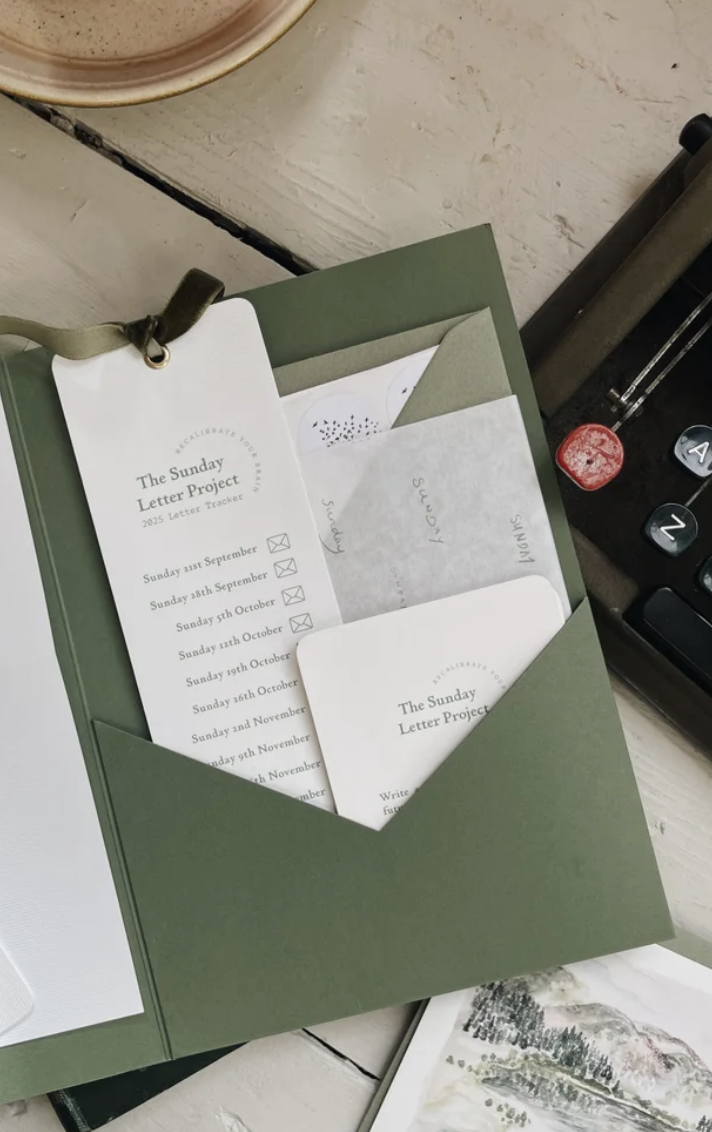
Thankfully, a handful of thoughtful people continue to actively encourage letter writing even after the pandemic receded. In 2023, a couple in Cheltenham created The Sunday Letter Project from their stationery shop. They started asking customers (and then anyone who wanted to join) to sign a pledge committing themselves to writing one letter every Sunday. The letter can be to someone you know, or if you need help connecting with another letter writer, they can help with that, too.
As co-owner Rebecca writes,
When we leave our lives to chance, it is too easy for convenience to triumph. The project is designed to create a trellis to hold us upright: we pledge to write a letter every Sunday, to ensure that our stories are written. The frame stands firm: we can twist our vines around it. Perhaps some weeks we will meander away, bloom freely, but we have a way of returning to centre, charting the path intended. (Rebecca’s Letter)
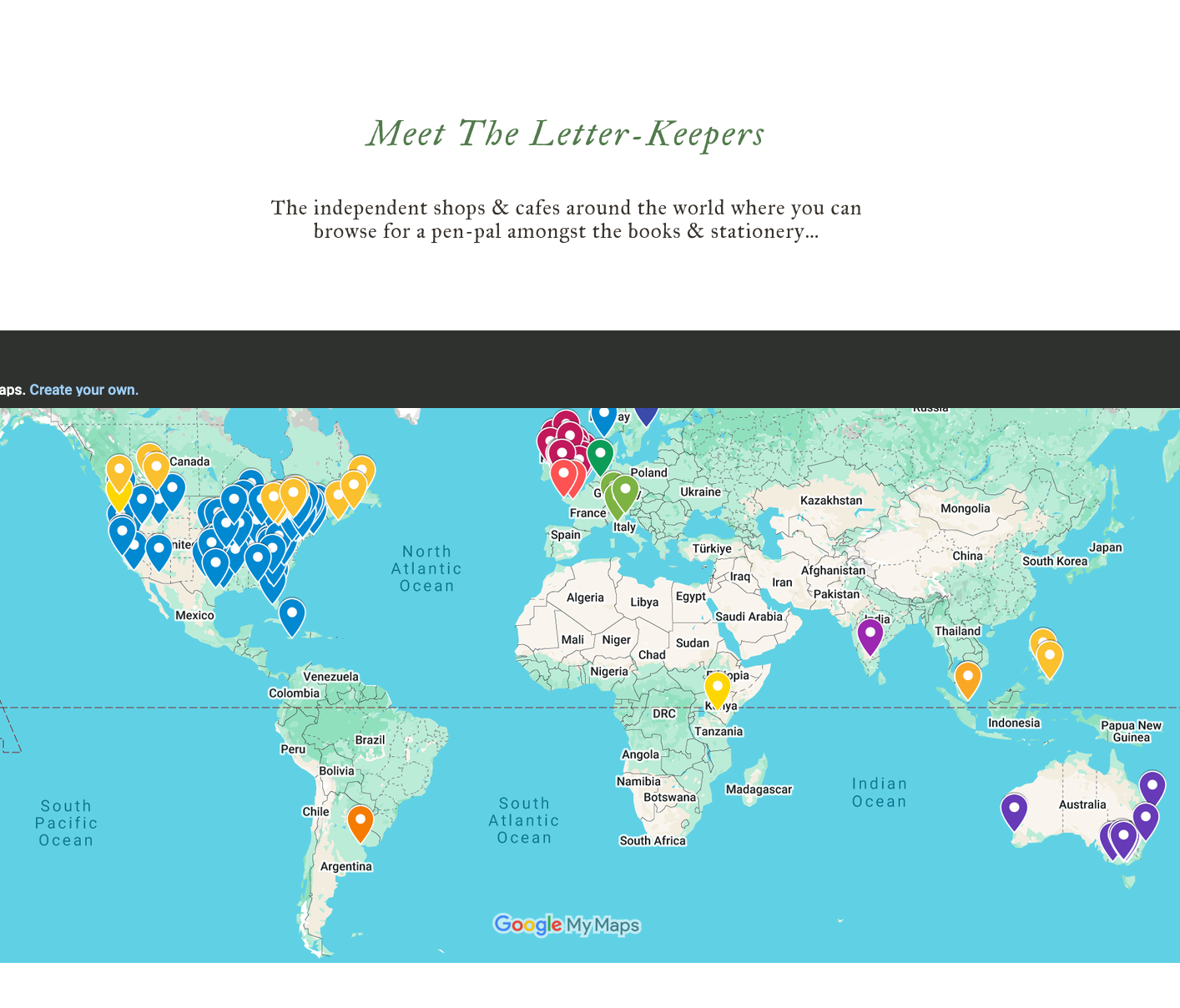
To help match pen pals, the shop owners serve as a central mail exchange, or Letter Keepers. Rather than giving out your personal address, you and your pen pal(s) can send letters through the shop’s address. The project’s popularity encouraged the shop owners to collaborate with other like-minded businesses in the UK, Ireland, Europe, the US, Canada, Australia, India, Singapore, the Philippines, Kenya, and Argentina to act as Letter Keepers.
Striving to “keep the world a little bit more human,” the organizers developed the project as a way to help people move away from their devices and toward personal connection.
A letter is the exact opposite of how we usually communicate now. In a world of text and email, people expect communication to be instant, casual, and constant. I think so many of us are tired of this way of being and are ready to step back into a gentle rhythm of meaningful, thoughtful correspondence. If that is you, please accept our invitation, and begin to write your way home. (The Sunday Letter Project)
Syme also remarks on letter writing as a way of slowing down. She writes:
In a world that feels increasingly flattened by algorithms and the endless numbness of the digital scroll, letter writing is refreshingly, effortfully human. Letters are not efficient. They get lost. They take time. They require patience and slow thinking. Writing a letter is an intentional way to make yourself heard and generate thoughtful interactions; you push your words toward another, hoping they will scoop them up with equal generosity. It is also a very glamorous way to spend an evening. (Introduction/Dear Reader)
And she concludes her book by observing:
Very little has made me feel more connected to people—and to the world we live in—than carrying on years-long correspondences with dozens of total strangers who I might otherwise have never known, who have allowed me into their mailboxes and into their lives, who have shared with me their secrets and in turn have held mine, and who have been honest and bold on the page. (199)
While some people may view letter writing as a “lost art,” I think that many of us still love to experience the thrill of discovering an envelope or package in our mailbox that has been carefully crafted just for us. And, as I regularly remind my daughter, the best way to get mail is to send something out into the world. Draft a quick note to a loved one, send a photograph and/or a card to someone you miss, write a few lines on a postcard to someone new—however you choose to do it, you’re guaranteed to brighten someone’s day. Not only that, but by writing down your stories, you are sharing and preserving your memories for future generations.
Learn More:
- Watch the short video Finding Pen Pals in a Pandemic to learn more about #Penpalooza.
- For a history of the U.S. Postal Service, check out this interview with Winifred Gallagher on Throughline.
- Make plans to visit the National Postal Museum in DC. It’s definitely on my list!
- Participate in World Postcard Day on October 1st.
- Check out this list and this list of epistolary novels (written as a series of letters).
- Syme’s book includes a list of correspondence connection programs “that can match you with the elderly, the sick, the incarcerated, the lonely or anyone else who could use a little pick-me-up.” (26). Here are a few to consider: Girls Love Mail, Love For Our Elders, and Black and Pink.