Public Libraries

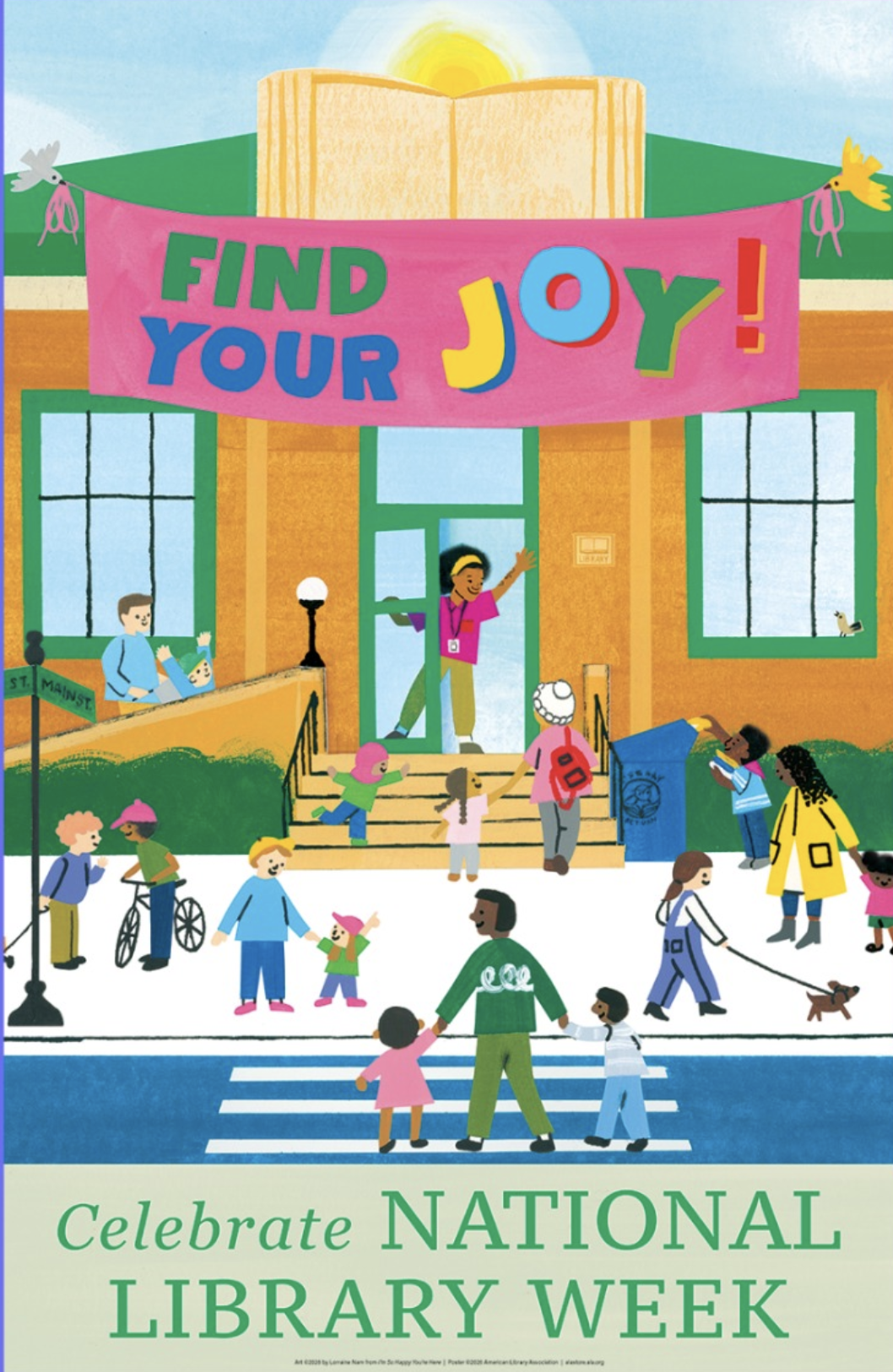
Libraries in the U.S. started as private collections or restricted spaces within academic institutions. Their use was limited to enrolled students, faculty, family and friends, and later subscription members. Only in the mid 1800s did the federal government designate funding to establish what we know today as "public libraries." These facilities offered local citizens the opportunity to borrow books without payment and engage in activities like book discussions without a formal invitation.
As Hillary Brady and Franky Abbott argued in their 2015 exhibit, A History of US Public Libraries, "The ability to access free information has become a core ideal of what it means to be an American citizen, despite periods of historic inequality. Libraries help make this access possible by placing public benefit at the center of their work and continually adapting their strategies to meet changing public needs over time." This is true with libraries around the world, as philanthropic citizens and non-profit organizations helped to foster this public service.
Public libraries may have started out by loaning books to community members, but over the years they have developed into so much more. They welcome everyone regardless of age, class, education, race, gender, or political view. They provide rooms with warmth in the winter, air-conditioning in the summer, access to wi-fi and computers, clean restrooms, and soft places to lounge. There is no expectation of spending money in order to stay a while. Quiet is encouraged and stations are often set up throughout the space with activities you can do alone or with someone – complete a puzzle, build with Lego, journal, or add your vote to a whiteboard for best ice cream flavor/worst movie/greatest love song.
The pandemic helped us pay more attention to how isolated we’d become as a society. COVID exacerbated that loneliness and in the aftermath, more and more people seem to be looking for spaces and places that offer connection. Public libraries allow us to interact with our community in ways that often don’t exist elsewhere.
Among the many social media posts and publications related to National Library Week (April 19-25), my favorite tells the story of a night in 2023 when library staff at the Gothenburg City Library in Sweden accidentally left the library unlocked. When they arrived the next morning, they were surprised to find that the community had continued to use the space as if the staff were there. One librarian commented, “They thought it was a bit empty. But the people in the library behaved as usual. Many were sitting reading newspapers, some families were in the children’s section and others were searching for books on the computer.” The librarians were so pleased and proud of their patrons that they created a social media post thanking their community for their thoughtful behavior.
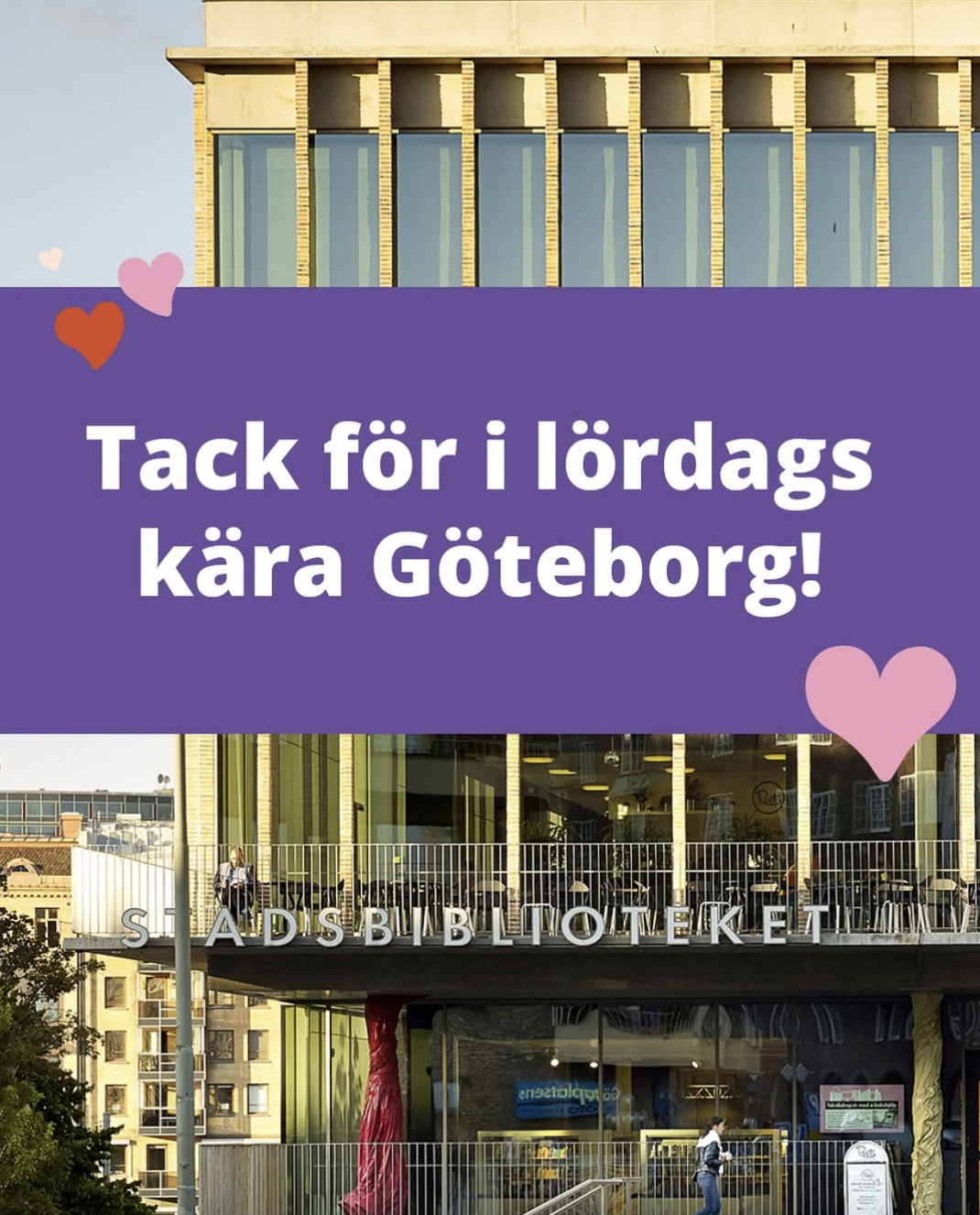
Mihai Andrei, the author of the article, explains, “This unplanned event is a testament to the community’s respect for shared spaces and resources. In an era where trust in public institutions often wavers, the citizens of Gothenburg demonstrated that integrity and responsibility remain deeply rooted values.” He adds, “this episode underscores the library’s role not just as a repository of books but as a communal haven—a place where trust, learning, and community converge.”
My family and I have started including visits to public libraries as part of our travel routine (also stopping in coffee shops, bookstores, and botanical gardens whenever we can). In our experiences, the libraries are very welcoming and do not require a library card to use the resources they offer. You only need to register as a patron if you want to check something out of the branch. We love exploring how librarians have creatively organized their collections, their spaces, and their interactive experiences to foster literacy, play, and creativity.
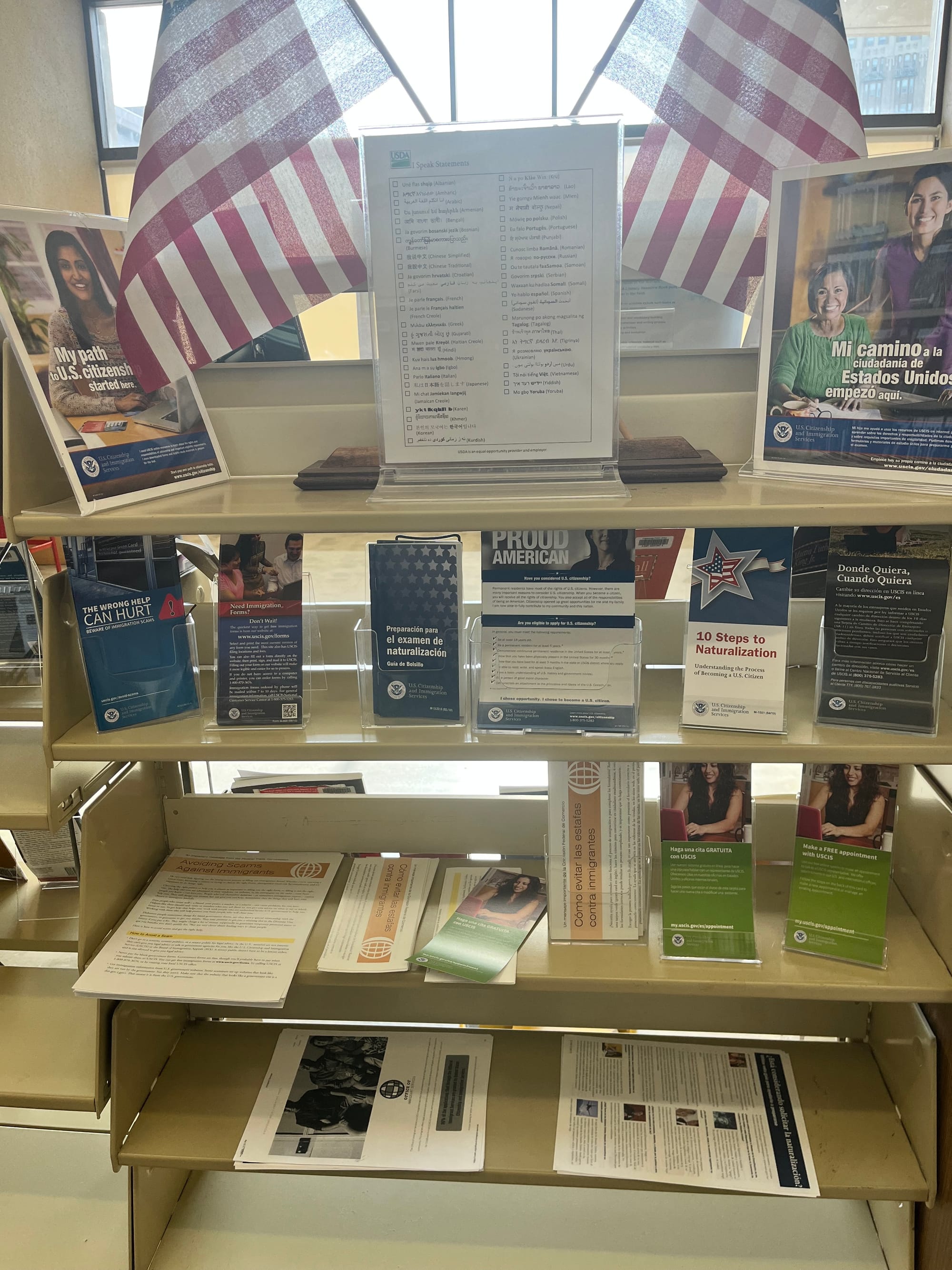
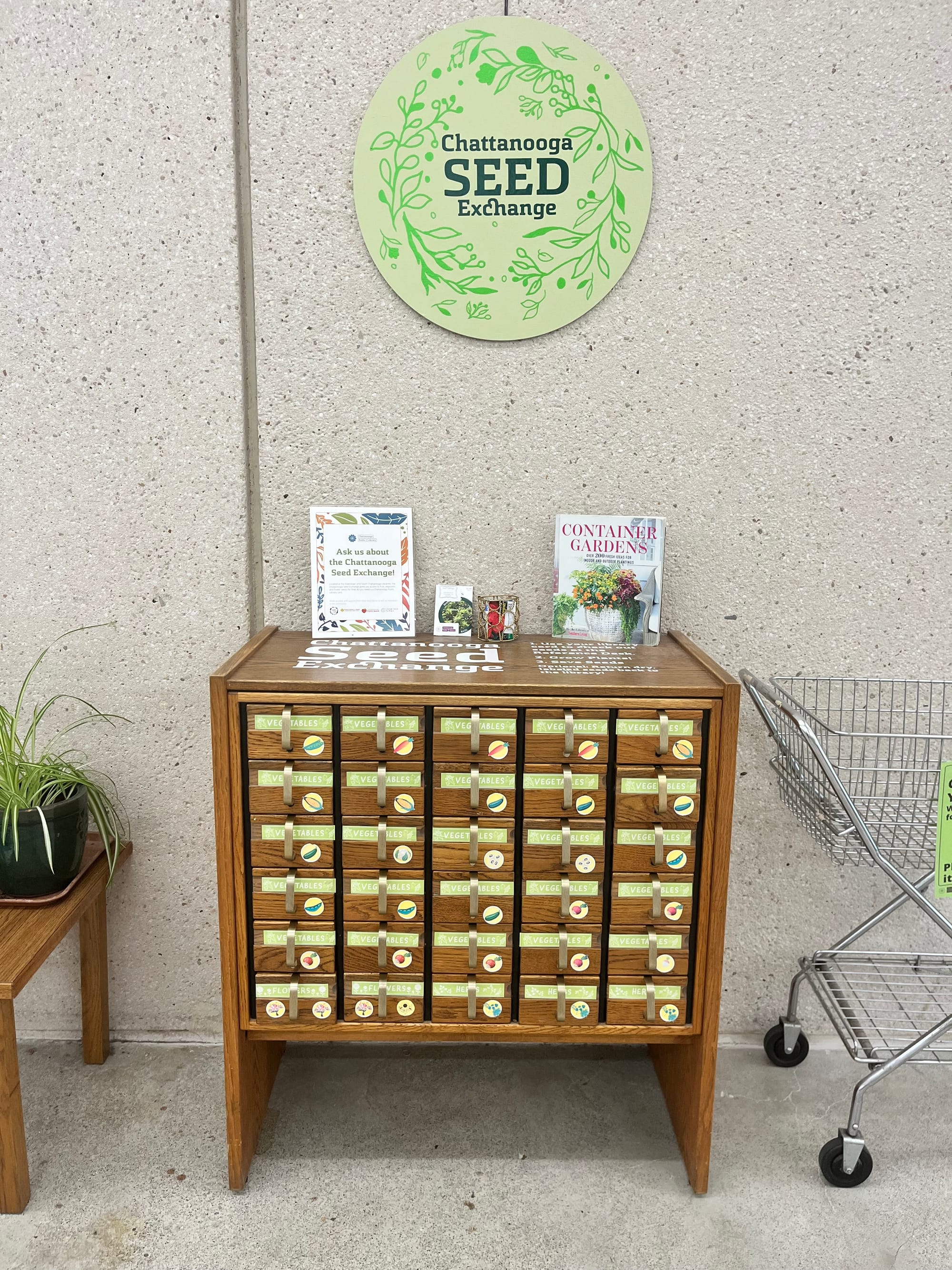
Last May, we went to Chattanooga with the primary purpose of visiting the main branch of their library. The Chattanooga Public Library offers a wide range of books and resources for all age groups. For children, their space offers train sets, coloring stations, play kitchens, climbing sets, and kid-friendly accessible computers. For teenagers, they provide art kits, Lego stations, a recording studio with weekly production assistance, a noise closet full of musical instruments, a kitchen for cooking workshops, a closet to rent clothes for special occasions like prom, templates for writing letters to local representatives, couches with video game consoles, and even an arcade with foosball, air hockey, and ping pong tables. For adults, they supply passport applications, immigration applications and information, postings of local job opportunities, bus schedules, voter registration, a seed garden, genealogy starter kits, and an oral history digital exhibit. They even created Mindspark memory kits filled with activities, puzzles, and games to do with loved ones suffering from dementia.
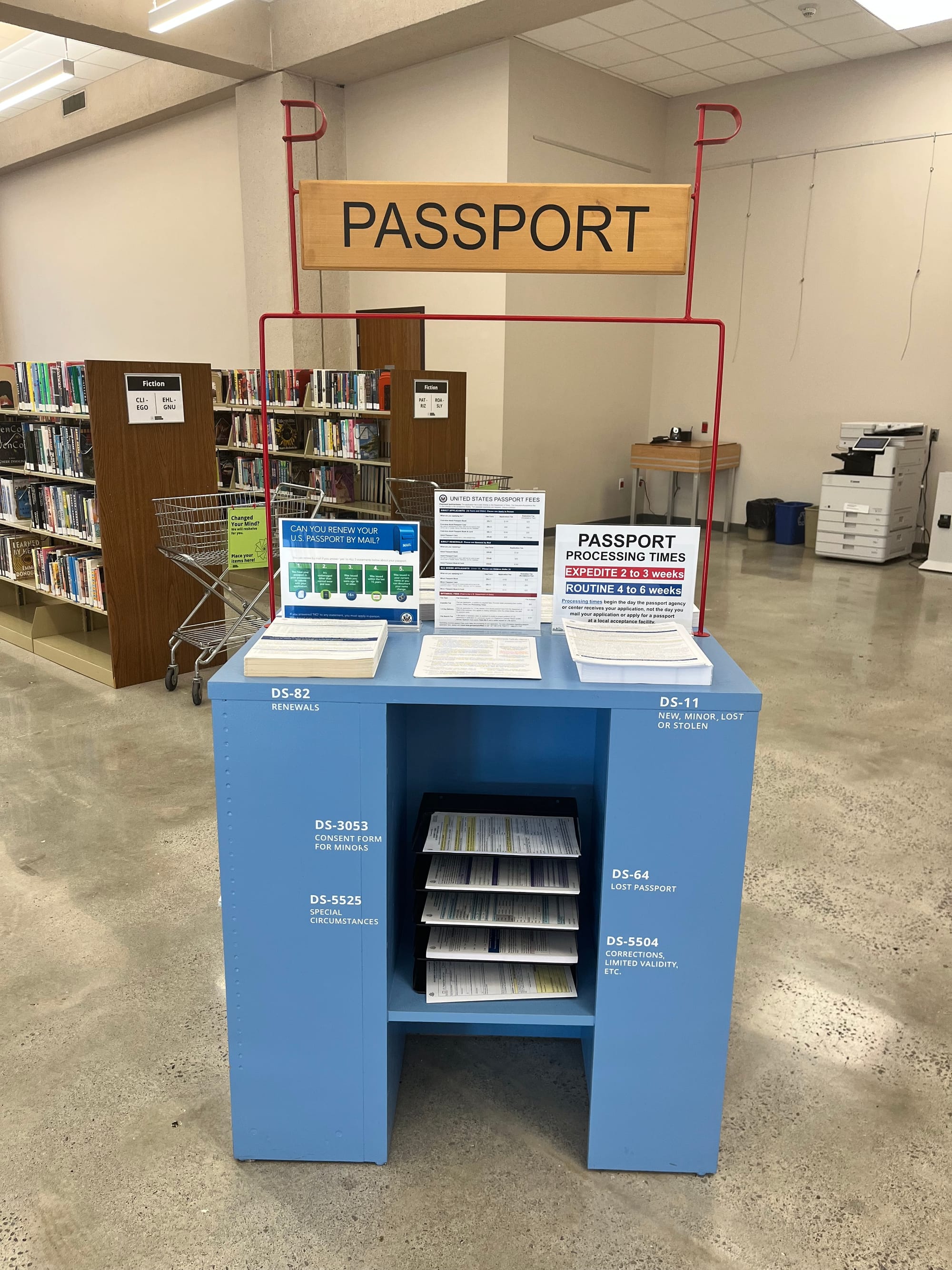
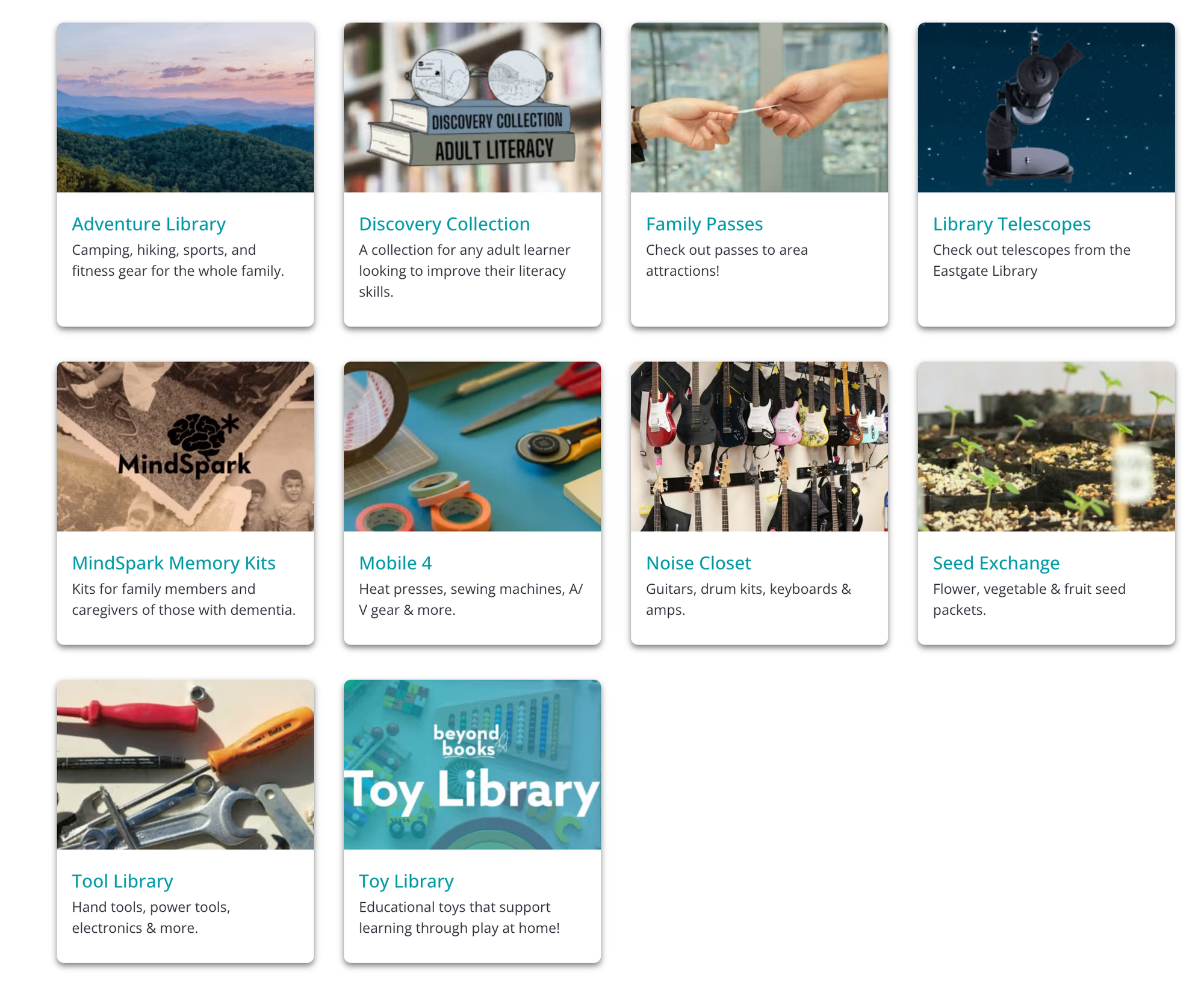
The fourth (top) floor houses the Makerspace, designed to help community members complete artistic projects at low cost and regardless of prior experience. There are so many incredible resources available here that the library recommends you book a free 20-minute tour of the facility. Spenser, our librarian/guide, showed us the sewing areas where they offer a series of free classes and allow patrons to check out machines for up to one week, the tool and adventure closets full of items you might want to try while on a small camping trip or completing a home DIY project, and the fiber arts studio complete with a functioning loom. The space houses laser cutters, CNC routers, 3D printers, resin printers, and large format printers. They have laminators, button makers, screen printers, and vinyl plotters. There is a photo studio, design studio, and zine library with a typewriter, copy machine, and stamps to make your own zine for their permanent collection. In case you’re a bit lost about how to use any of these tools, you can arrange one hour of free individual instruction with a librarian.
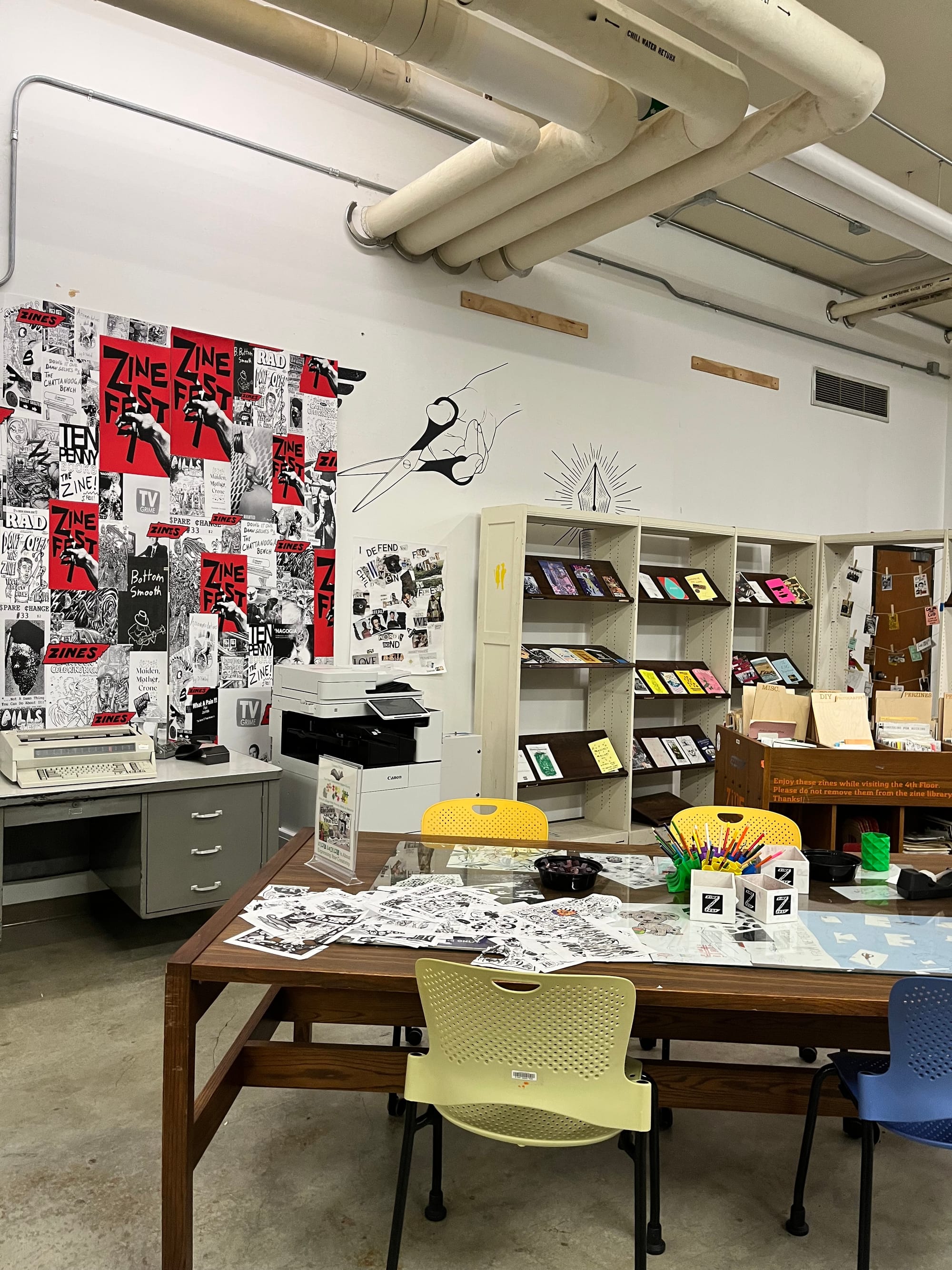
Many of the projects set up around the space are intentionally collaborative (zines, stickers, and fiber arts) and the staff also host regular craft circles to encourage people to form communities around their interests/projects. Unless you want to take a piece of equipment home, you do not need a library card to play and create. Additionally, the only cost associated with the experience is a modest fee for materials. My daughter and I made buttons to give to our friends at home - the cost for printing our designs and making 24 buttons was $3.
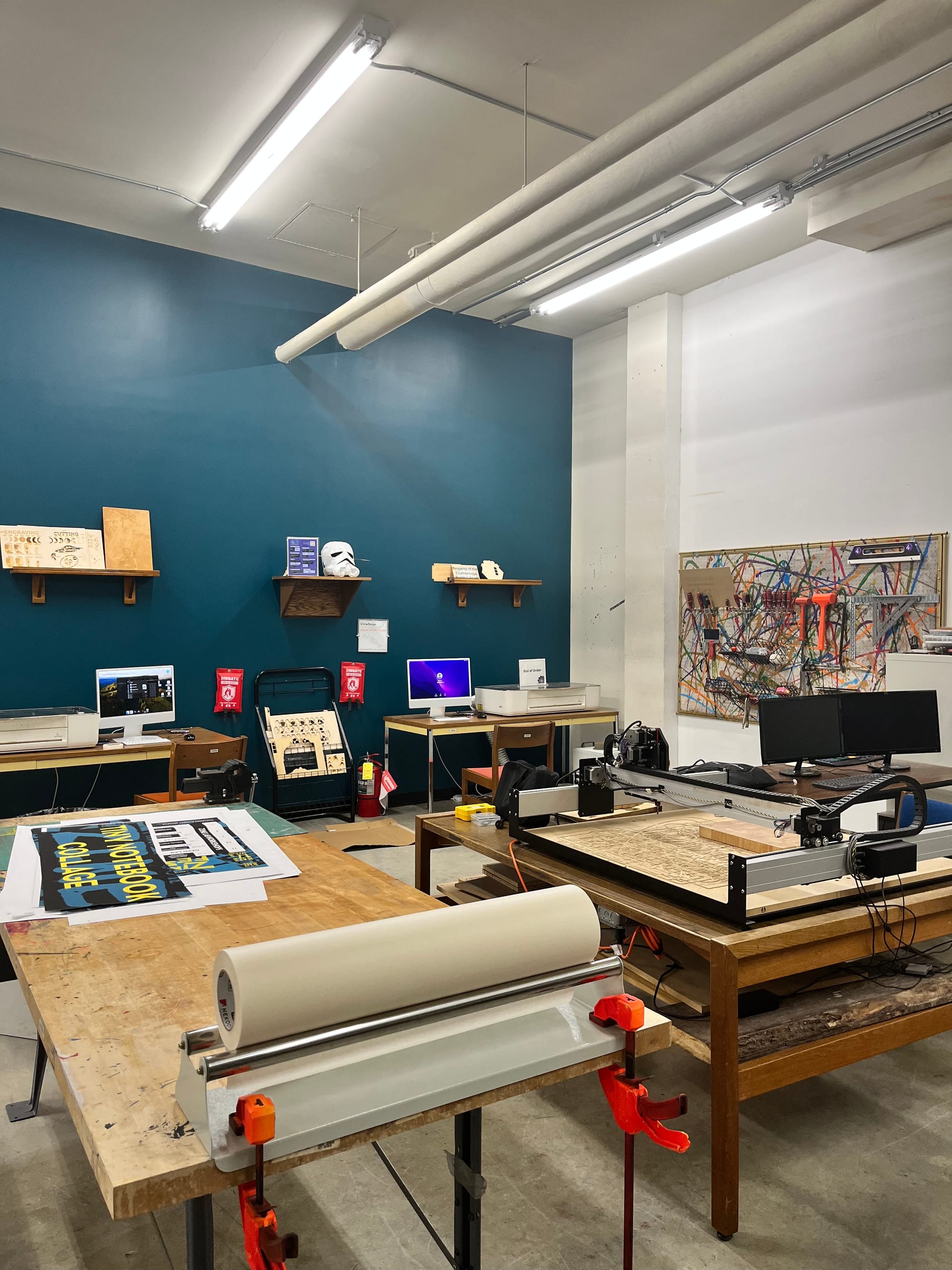
It was easy to spend an afternoon here exploring all of the options and choosing which activities we wanted to participate in. The stations and resources are thoughtfully curated by the librarians to meet the different interests and skill levels of their community. The staff offered assistance every step of the way while also respecting our preference to observe and gradually make our way into projects. The overall effect was one of care and consideration.
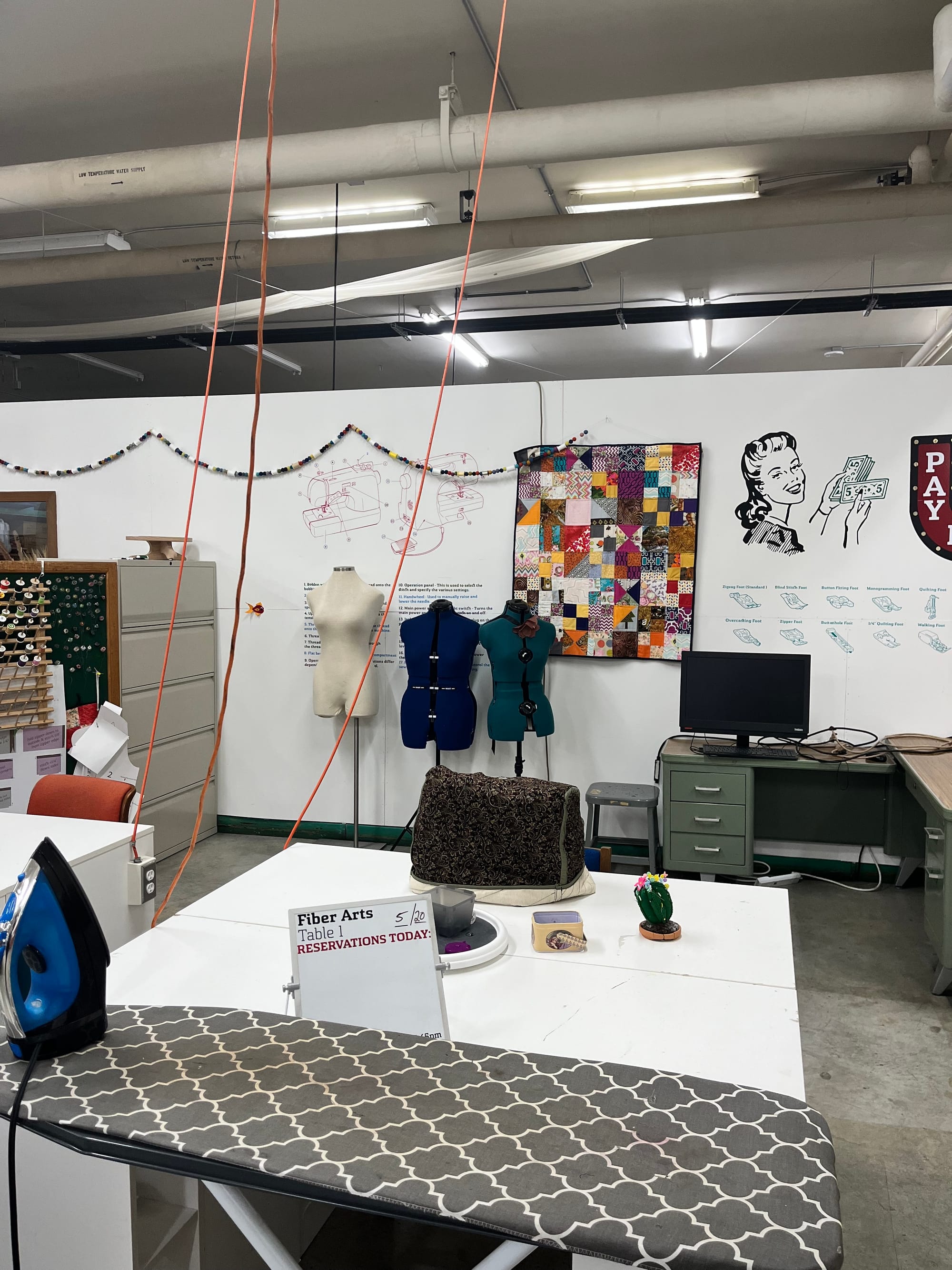
Back in our hometown, the Mary Vinson Memorial Library utilizes its municipal resources to offer equally thoughtful programming. They have their own versions of a seed library, kids play space, and storytelling theater, along with yoga classes and a puzzle exchange closet. In partnership with state parks and museums, they loan out experience passes that have allowed us to visit places in Atlanta like the Center for Puppetry Arts, Michael C. Carlos Museum, and Shakespeare Tavern Playhouse with no cost. Their “We Read Wednesdays” program helps kiddos practice reading out loud to volunteers and their summer reading programs get our whole family to track our reading in exchange for prizes. Both of these initiatives played a large role in helping our daughter learn to read at an early age and fostering her love of books (and libraries in general). The staff also collect hygiene products to share with our unhoused community members, offer workshops in creative writing and personal finances, and host book events to promote local authors. The adjacent Hancock Branch offers a welcoming, inclusive, and safe space for teens to hang out after school and on Saturdays. They organize a wide variety of events, including a poetry cafe, cooking club, anime club, and crafting days.

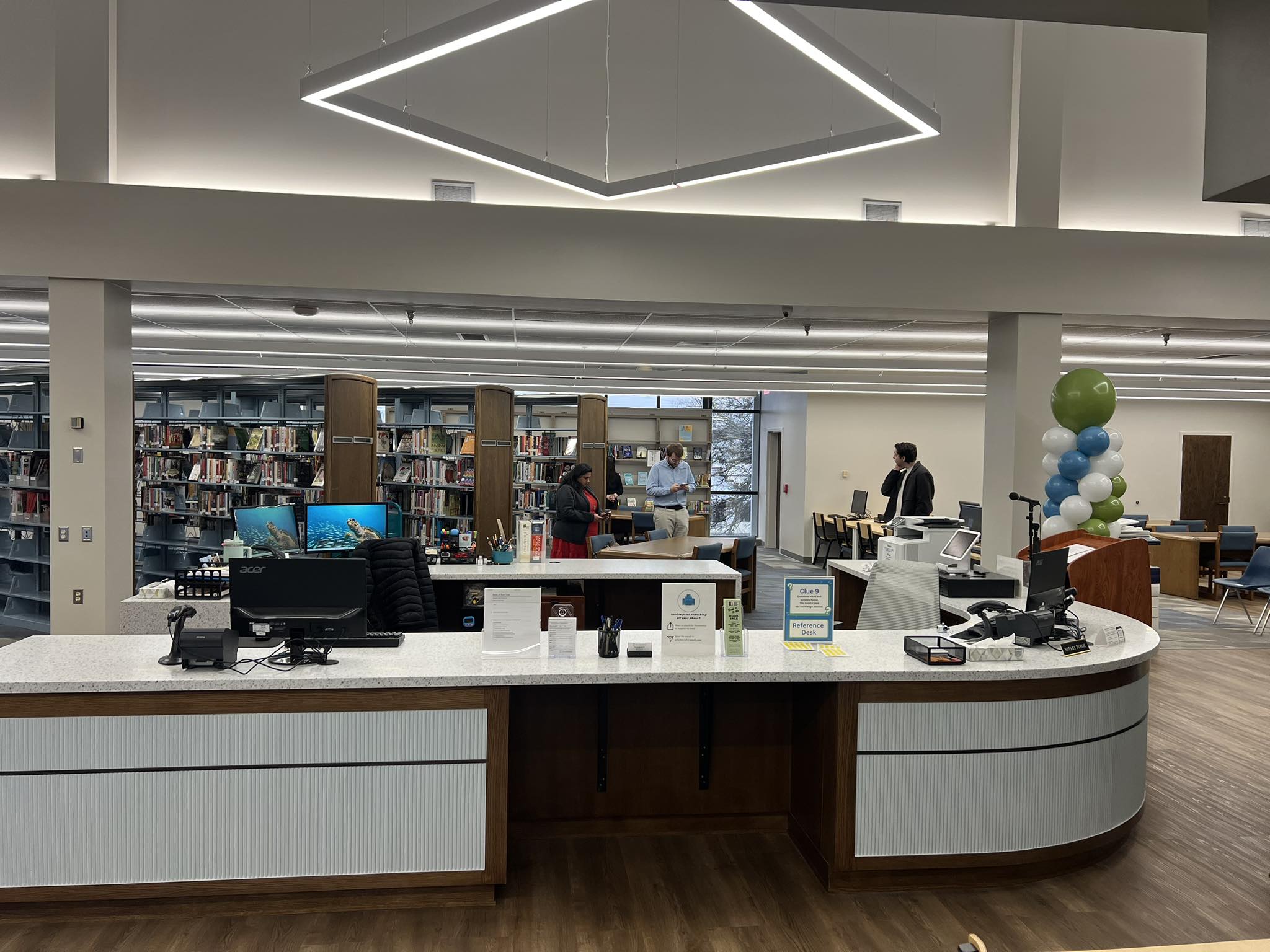

The staff treat me and my family like celebrities - always referring to us by name, making recommendations based on our individual reading tastes, and going out of their way to include us in their events. They are equally kind to everyone they interact with. I’ve watched the reference librarians answer calls from an elderly patron who needs help with her crossword puzzle (she calls every day). The branch manager sent me a personal email to let me know when they ordered a copy of my book for their collection. And the local history room, lovingly looked after by a volunteer named Charlie Brown, serves as the town’s communal archive. The space holds historical maps, school yearbooks, Civil War and American Revolution registers, and newspapers on microfilm.
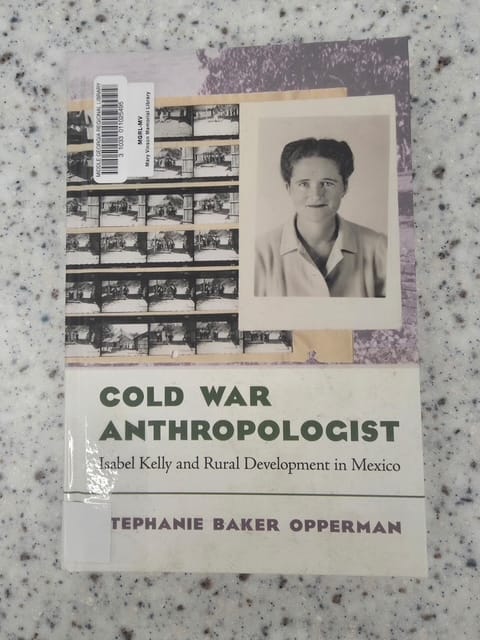
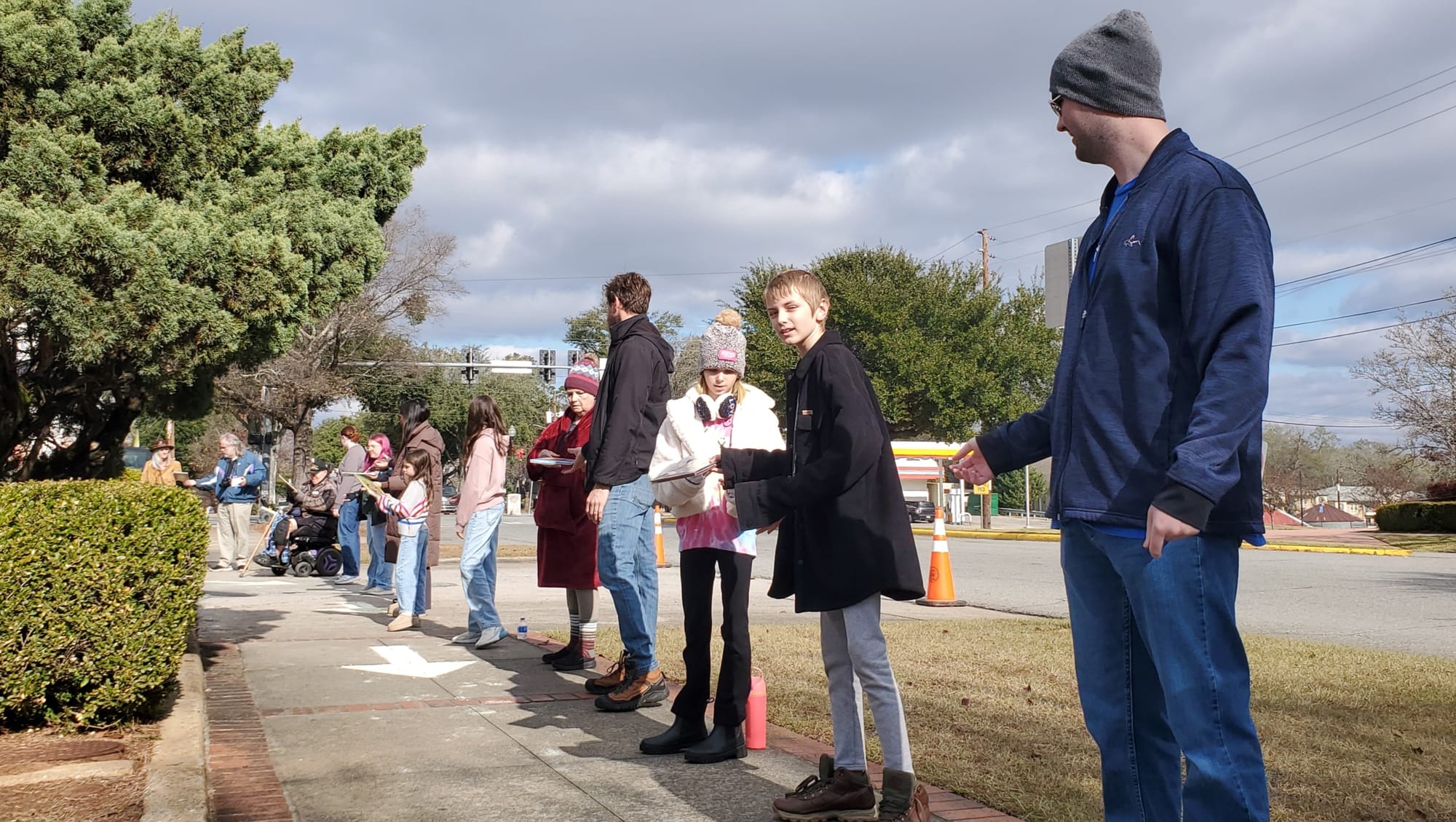
While federal and municipal funding for public libraries are steadily at risk (see Take Action for Libraries), many people in our town recognize the efforts the librarians make to accommodate all of our growing needs with finite resources. We show up in droves for their annual book sale, knowing the money will go toward future programming and educational materials. We write letters praising the work of our librarians to our government representatives and city council members. After remodeling their facilities, the library organized a human chain to move books from their temporary space back into the main building. Lots of community members, including my family, showed up in support.
In a political and social climate fraught with division, anger, and individuality, it is incredibly important to support the places in our community that offer an unqualified welcome, a sense of care and thoughtfulness, and a path toward ease and togetherness. Not only do they help us preserve our collective memories, they also help us create new ones.
Learn More:
- Listen to The Library as the Soul of the Community
- Read The Library Book by Susan Orleans
- Read What You Are Looking for is in the Library by Michiko Aoyama
- Read this article about an amazing public service offered by the Auburn University Library.
- Download the free Library of Things Toolkit and consider how to make a sharable public space in your own community.
- Listen to What it's like to be a prison librarian?
- Consider donating to Chicago Books to Women in Prison or a similar organization in your community.