Ynés Mexía

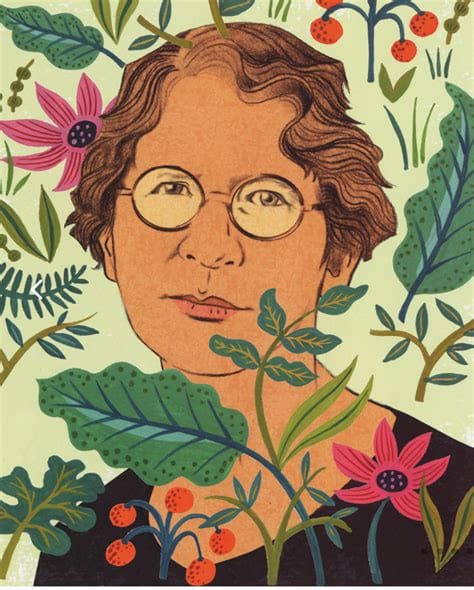
I first learned about Ynés Mexía when listening to the podcast Anytime Now by Honest History. The show is geared toward young historians and I downloaded a few episodes to see if my daughter might like them. On my way to pick her up from school one day, I started listening to the story of a 57-year-old Mexican-American woman who traveled alone throughout Mexico, South America, and Alaska collecting botanical specimens in the 1920s and 1930s. I was hooked!
While I am very familiar with accounts of male adventurers exploring the Amazon rainforest and jungles of Mexico, I had never heard the story of Ynés Mexía.* Thankfully, educator Durlynn Anema wrote two books, Ynés Mexía: Botanist and Adventurer and The Perfect Specimen: The 20th Century Renown Botanist Ynés Mexía, to bring her account to a wider audience.
Mexía was born in Washington DC in 1870. The daughter of a Mexican diplomat and a Baltimore socialite, she experienced a lonely childhood, preferring reading and being outside to the hosting priorities of her mother and sister. By the time she was nine, her parents divorced and her father moved to Mexico City. Mexía followed her mother and sister to Philadelphia, where she was quickly sent away to boarding schools. After graduating high school in the 1880s, her father requested that she join him in Mexico City to run his household and ranch. When her father died in 1897, she inherited his property and subsequently endured two quiet marriages (her first husband died young and she ultimately divorced her second husband). By 1909, Mexía’s doctor diagnosed her as suffering a mental breakdown and encouraged her to relocate to San Francisco where she could enjoy the outdoors and change of scenery.
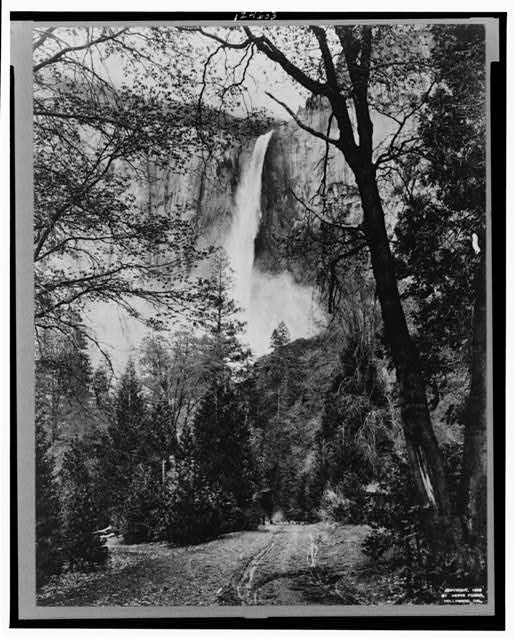
Mexía quickly fell in love with the Bay Area and developed a strong interest in nature. She regularly visited Golden Gate Park, Yosemite National Park, and the Redwoods. She joined the Sierra Club and the Save-the-Redwoods League. In 1920, she enrolled in the botany program at the University of California, Berkeley. She was 52 years old and finally discovering her passion. By 1925, she joined her first expedition to Sinaloa, Mexico in order to collect botanical samples for Stanford University. This voyage confirmed for Mexía that she wanted to spend the rest of her life traveling to collect specimens and that she preferred to work alone.
In a 2020 JSTOR blogpost by science writer Jess Romeo, the obstacles Mexía faced at the time are put into historical context. Romeo quotes historian Pamela Henson: “Male scientists objected to women in the field because they feared they would lower the level of scientific discourse.” Not only that, but many men also felt that women were ill-suited for tropical environments.
In the article How Finding Rare Plants Saved Ynes Mexia's Life, writer Kate Siber argues "Not only was she a woman, she was also of Mexican heritage and suffered some prejudice in a largely white field, and she was older—she started her career in her mid-fifties." (Outside)
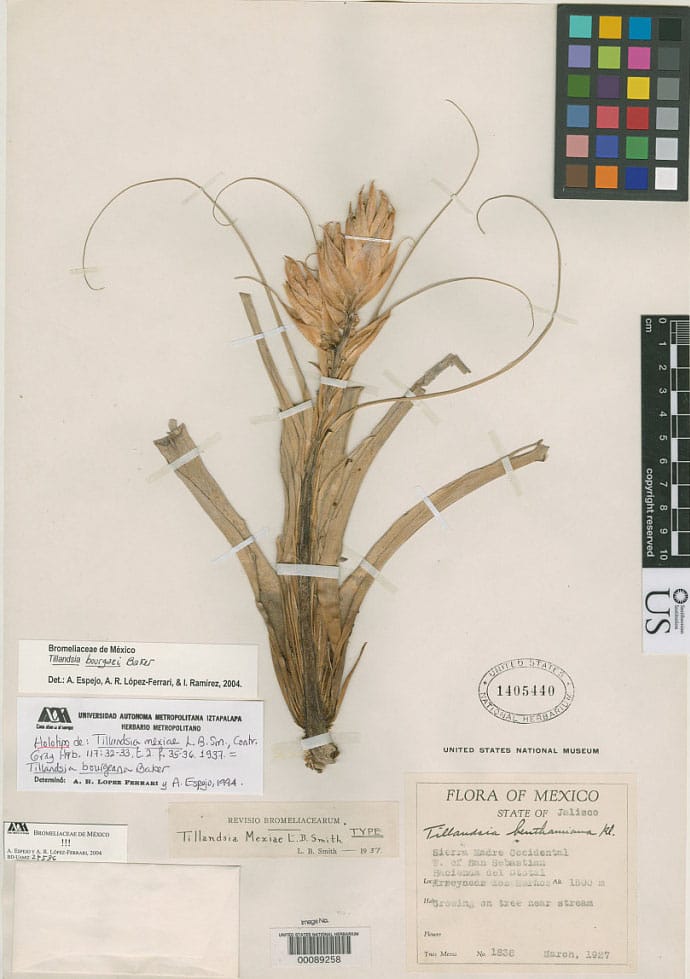
Despite these challenges, Mexía obtained funds from universities and private institutions to collect samples from Mexico (1925, 1926-1927, 1929, 1937-1938), Alaska (1928), Brazil and Peru (1929-1932), Ecuador (1934-1935), and Chile, Peru, Argentina, and Ecuador (1936-1937). The National Park Service acknowledges that Mexía was “the first botanist to collect plants in what is now Denali National Park. She often traveled solo or with a few Indigenous guides. She advocated for Indigenous rights in the areas she collected, valuing their knowledge, perspective, and right to the land. She would spend months in the field, riding horseback and sleeping outdoors, something that shocked many because she was a woman doing this work.”
While she valued her independence and uncharacteristic adventurous attitude, she also recognized how she might appear to others. In her journals, quoted by Anema, Mexía recalls:
The village was treated to the sensation of all time to see a woman [riding a horse] astride. I feared knickers would be too much for the Brazilians, but even a divided skirt was beyond their wildest imagining, and every door and window was filled with, I suppose, shocked spectators. (Botanist and Adventurer, 83)
Yet Mexía stayed the course. Her interests in botany and travel far outweighed any concerns for local critiques of her behavior. She writes:
Most of us, I think, have felt a fascination of the Amazon region. So much have we heard of its rivers, its tropical beauty, its luxuriant forest, the wild life and wilder Indians that lurk in its depths, that the pictures drawn by our imagination are vivid and unique. This vision of the unspoiled wilderness drew me irresistibly. (Botanist and Adventurer, 88)
Through her journals, you can sense how much she loved being outside, exploring new-to-her places, and documenting all she saw as best she could. For example, here is how she describes encountering a storm in the Peruvian valley:
The shining, cream-brown river, stretching from sunrise to sunset, confined by living green walls on the right and on the left, and above all the high-arched sky, delicately clouded at dawn, its intense blue relieved as the sun rose higher by fleecy white clouds, which soon piled aloft in huge cumuli, and turning black and threatening as they tore down upon us in a torrent of blinding rain, with thunder and lightning, for the afternoon storm. The deluge lessened, passed us by, traveling Andes-ward, and left us crawling in its wake refreshed and enlivened under a cloudless sky until we headed into the burning heart of a tropical sunset. (Botanist and Adventurer, 97)
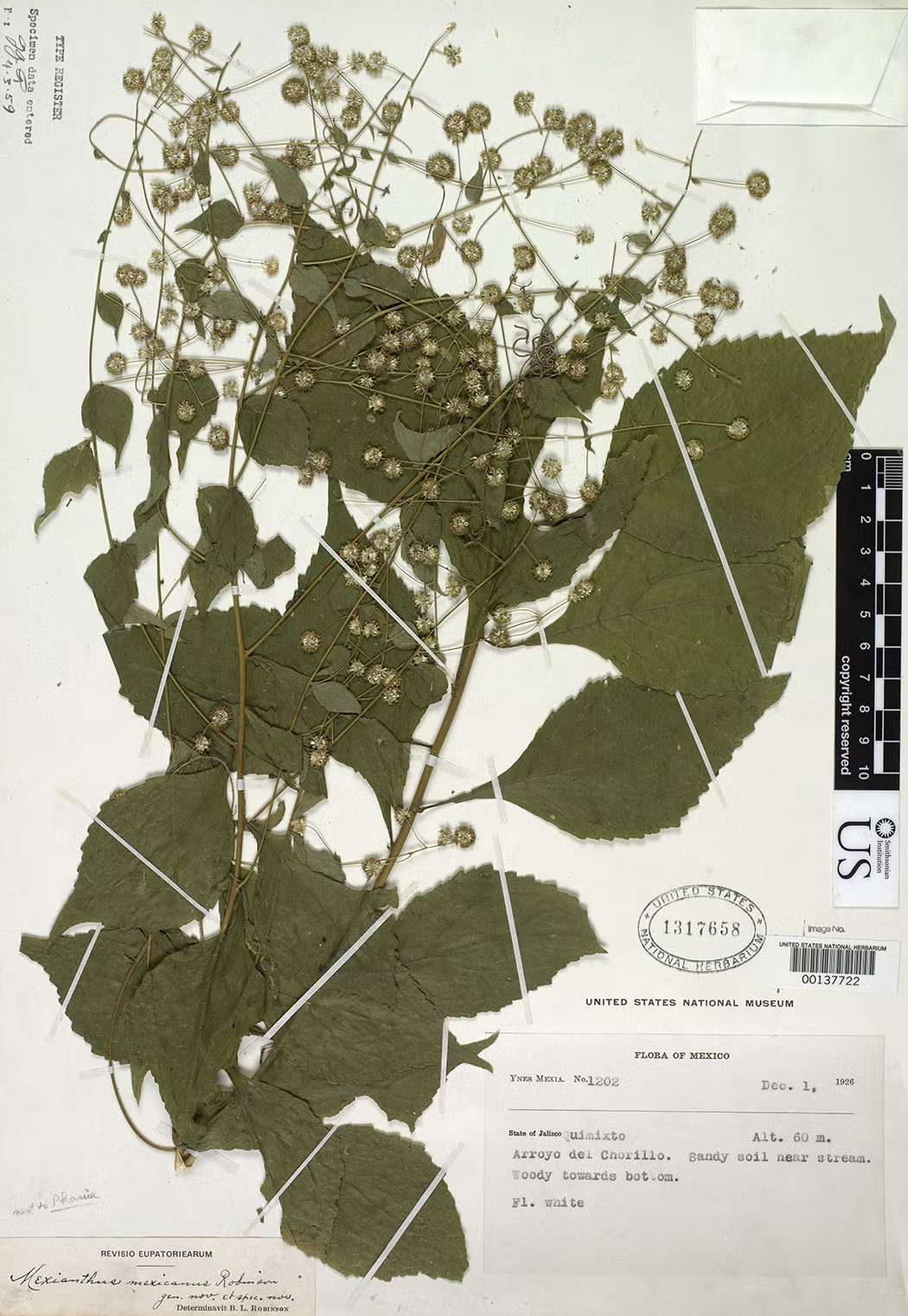
And her hard work paid off. Romeo notes, “After decades of fieldwork, she amassed a collection approximating 145,000 specimens, discovered two new genera, Mexianthus mexicanus Robinson and Spumula quadrifida Mains, and about six hundred new species of plant. More than sixty of those species were named in her honor.” (JSTOR)
Romeo concludes, "Mexía continued exploring up to the year she died. She was out collecting in the mountains of the State of Oaxaca, Mexico, when she became ill and had to return home. Death followed on July 12, 1938. The Mexican-American botanist and explorer is regarded as one of the most accomplished collectors of her time. Scientists continue to study her thousands of samples today." (JSTOR)
While many of us outside the field of botany may not be familiar with her work, Mexía left behind a legacy that continues to inspire environmentalists today. Here are few quotes about her:
“All who knew Ynes Mexia could not fail to be impressed by her friendly unassuming spirit,” wrote William E. Colby, the secretary of the Sierra Club, in a memorial in the organization’s bulletin, “and by that rare courage which enabled her to travel, much of the time alone, in lands where few would dare to follow.” (Outside)
Mexia was a pioneer. There was no one like her in her field at the time; a woman of color above 50 traveling the world as a botanist. She increased representation in the fields of conservation and botany, as showing that women should have the freedom to experience the world. Many people at the time said that a woman could not travel alone. Ynes Mexia said, "I don't think there is any place in the world where a woman can't venture." (NPS)
In the old photographs that remain from her years of collecting, Mexia almost always appears calm. In one, she sits on the rim of the Grand Canyon, legs dangling off a precipice. In others, she cross-country skis and snowshoes in long dresses or tiptoes across a log spanning a gaping chasm. Perhaps her face remained so serene because she knew these wide-open spaces—and their plants and denizens—had saved her life. (Outside)
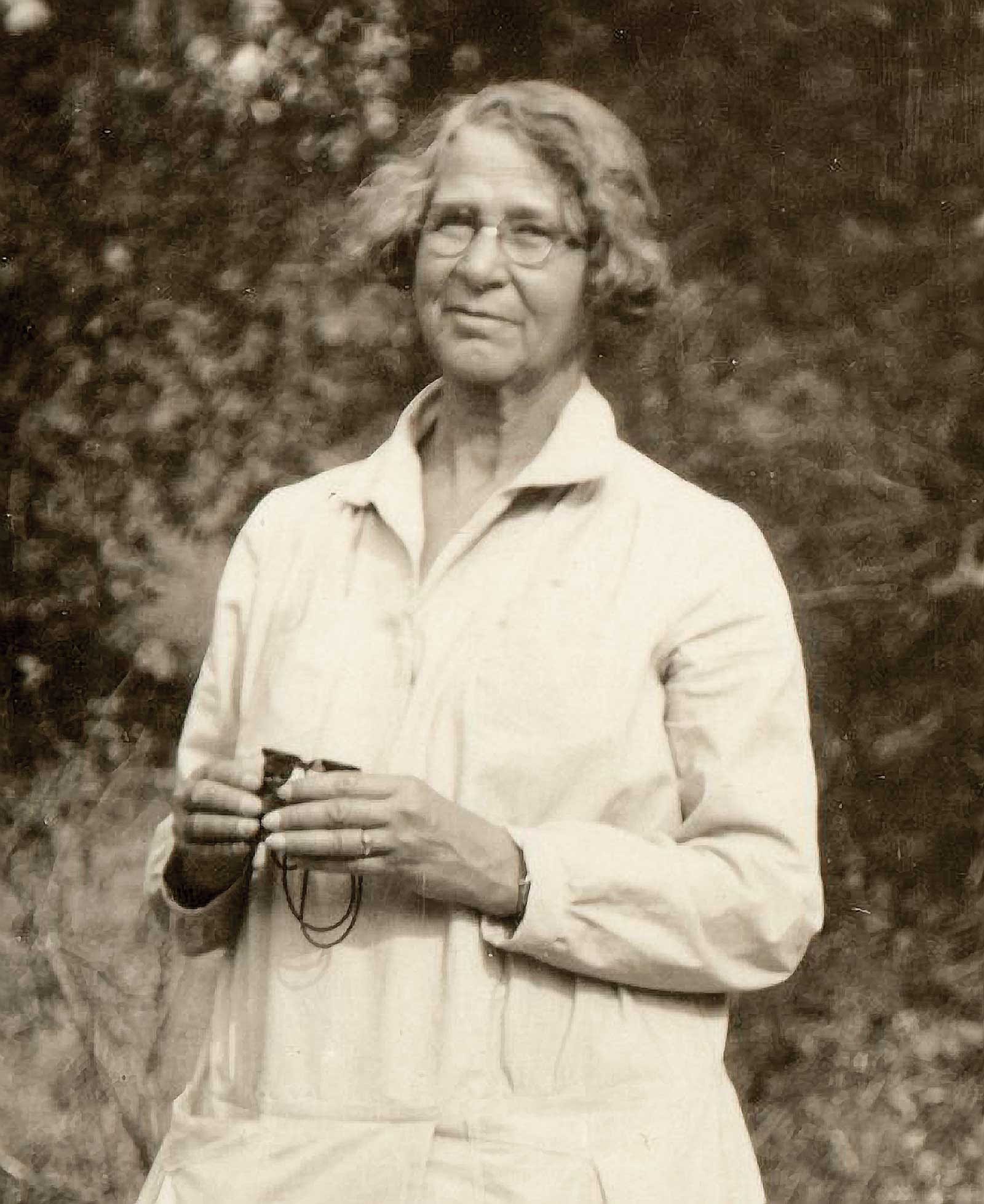
There are two things that stand out to me in Mexía’s story. First, she offers a counter narrative to accounts of modest women in the 1920s and 1930s that stayed home while male researchers documented the scientific world. Instead, she serves as an example of a powerful woman blazing trails that directly shaped scientific knowledge production.
Second, she also serves as an inspiring example of finding and following passions later in life. While many of her contemporaries were firmly entrenched in their traditional roles, Mexía created an entirely new chapter for herself devoid of any societal restrictions or expectations. She lived her best life from the time she divorced until the day she died and she left most of her estate to the Save-the-Redwoods League and the Sierra Club. I hope sharing her story will encourage more of us to consider the infinite possibilities available to us throughout our lifetime when we are brave enough to follow our imagination.
Learn More:
- Watch PBS short documentary Ynés Mexía: Mexican-American Botanist and Adventurer
- Check out Queen of Leaves: The Story of Botanist Ynes Mexia and Plant Hunters: The Stories of Two Woman Botanists from your local library to read with the kiddos (or young at heart) in your life
- Learn more about Mexía’s exploration in Mount McKinley National Park, today Denali National Park and Preserve
*For examples, see Naturalist Alfred Russel Wallace, President Theodore Roosevelt and Brazilian explorer Cândido Rondon, and Professor Richard Evans Schultes.