Fred Rogers

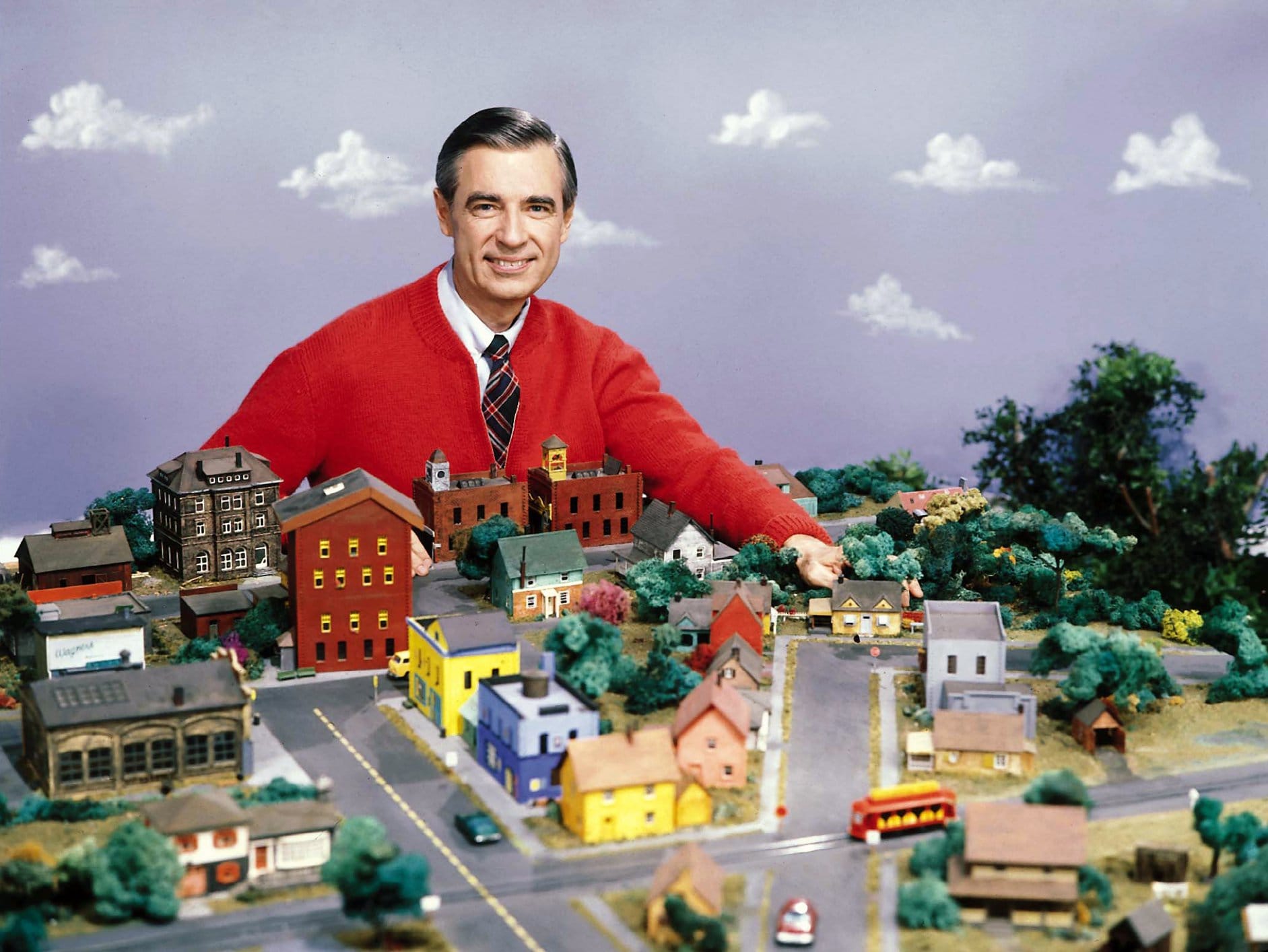
If you watched public television between 1968 and 2001, you are likely familiar with Mister Rogers’ Neighborhood. As a child of the late seventies, this program was a central feature of my upbringing. The characters who inhabited the Neighborhood of Make-Believe helped me laugh, feel, wonder, and navigate my way through the growing pains of early childhood. And Mister Rogers himself always offered a welcoming presence and a chance to slow down in the midst of an otherwise fast-paced day.
What I didn’t expect was how influential Fred Rogers would become to me as an adult.
Last spring, I attended a Teaching and Learning Conference in Columbus, GA. Many of the sessions centered around questions of responsible AI usage in the classroom, gamification, and mixed reality simulations. I was looking for ways to form deeper connections with my students, to encourage them to read books, contribute their own ideas, and collaboratively imagine new futures. And I just wasn’t finding panels that aligned with my values…until I attended a session on applying the lessons of Fred Rogers to higher education classrooms.
Dr. Monica Miller (Middle Georgia State University) opened the standing-room-only workshop by asking everyone to sing the theme song from Mister Rogers’ Neighborhood. Suddenly a room of strangers became neighbors. She spent the next hour walking us through the Fred Rogers’ Fundamentals of Learning and Growing and encouraging us to consider how to apply these principles to our college classes.
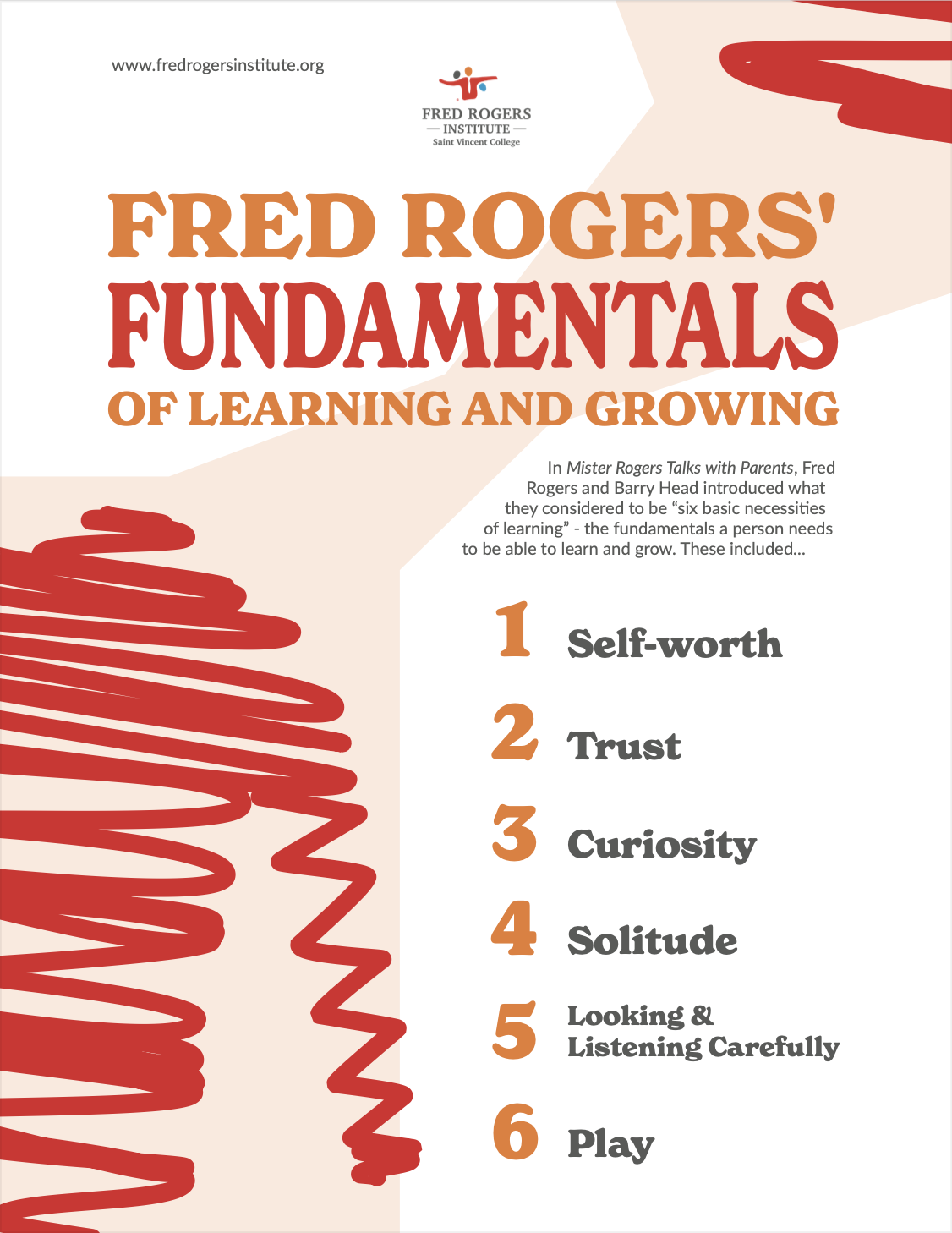
She closed by sharing information about the Educators’ Neighborhood hosted by the Fred Rogers Institute. The program brings together teachers, professors, administrators, directors, and other education-related professionals to discuss the work of Fred Rogers and its potential applications in our current practices. I left feeling uplifted, inspired, and hopeful–not easy in today’s teaching world. I went home and applied that afternoon.

I am currently part of the 2025-2026 cohort of the Educators’ Neighborhood. Engaging with clips from Mister Rogers’ Neighborhood and working with other higher education colleagues to develop ways of integrating those lessons into our own pedagogies has been incredibly rewarding. The practices and fundamentals we work with are simultaneously simple and supported by significant research in learning sciences.
In their book, When You Wonder, You're Learning: Mister Rogers' Enduring Lessons for Raising Creative, Curious, Caring Kids, Gregg Behr and Ryan Rydzewski argue that while Fred “worked with the leading minds of his day–including world-famous pediatricians, psychologists, and child-development experts…to ensure that everything children saw in the Neighborhood enriched their lives and nurtured their growth as human beings,” most people do not remember his “legacy as a scholar.” (Behr and Rydzewski, Introduction) The authors attribute this oversight to a common pattern in our ways of thinking: “The grunt work of building a knowledge base on which creative ideas can stand is almost always hidden from view and thus almost always forgotten.” (Behr and Rydzewski, Chapter 2) Fred worked to intentionally introduce his audience to the skill development and steady effort that most creative projects actually take, whether by introducing artists who shared their commitments to practice and repetition or by walking the audience through the numerous steps it takes to develop something from scratch.
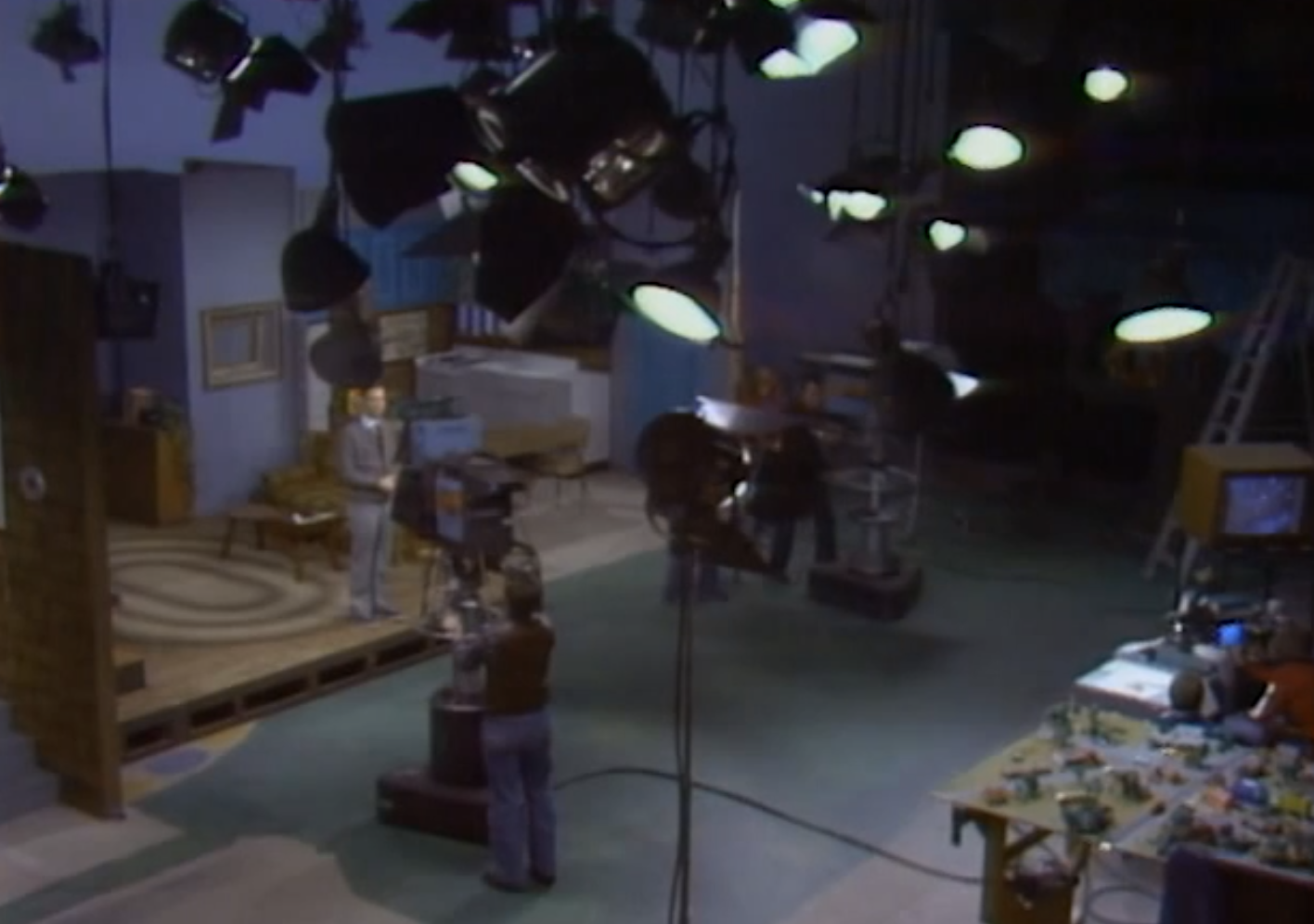
One of my favorite examples is Mister Rogers Tells Us About His Work (1984). Fred allows the cameras to zoom out from his television living room onto the sound stage, revealing all of the people working to produce the show, from the film crew, writers, and puppeteers to the musicians, guests, and sound technicians. The message: while the show may appear to easily come together each day, it actually requires a lot of behind-the-scenes work to make it happen.
How does this relate to teaching in higher education, you might ask? In my experience, many students today seem very focused on the outcome/final product of college education and have a hard time sustaining interest in developing their knowledge base through exploration, persistence, dedication, and imagination. What Fred helped me remember is that, while I might not be able to reverse this narrative, I can show my students why I am passionate about learning and teaching history. The effort necessary to meet the professional standards of the discipline is not small, and requires a steadfast commitment to engaging with historical materials and asking thoughtful questions about how they’ve been interpreted over time and by whom. This is not easy work, nor should it be. Just as Fred showed a consistent interest in child development, I now know that maintaining AND demonstrating curiosity in my own classrooms helps me be a better teacher.
But my growing appreciation for Fred Rogers doesn’t stop with what he is teaching me about teaching. The more I read about him, the more I am inspired by his dedication to standing up for what he believed in regardless of the circumstances and pressures building around him. Peaceful Neighbor: Discovering the Countercultural Mister Rogers by Michael G. Long (2015) opened my eyes to the ways in which Fred pushed cultural boundaries in favor of social justice.
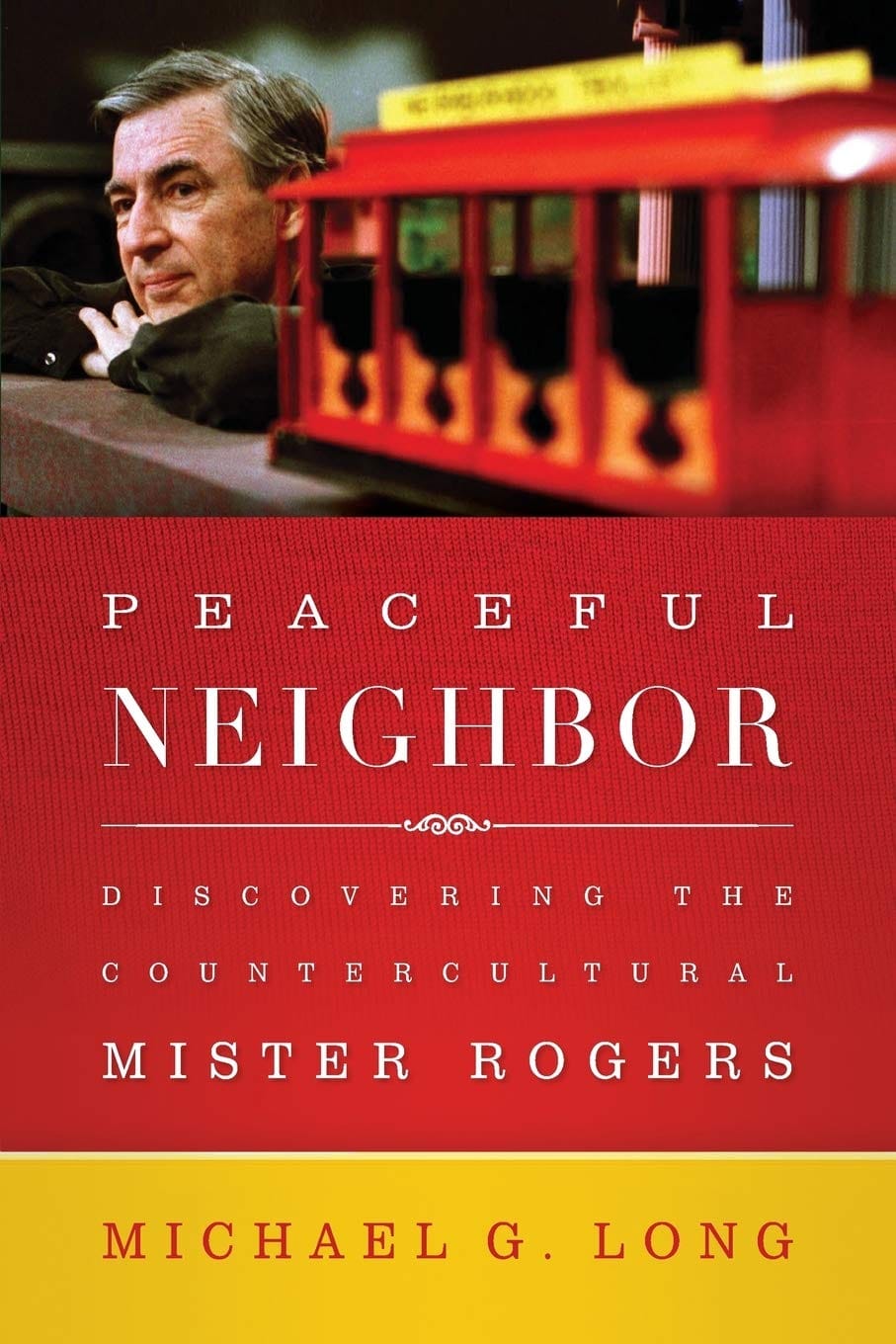
“As a model of being peace, Rogers showed us how to practice deep listening, deep thinking, and deep understanding–each of them antidotes to violence in any form.” (Long, 20)
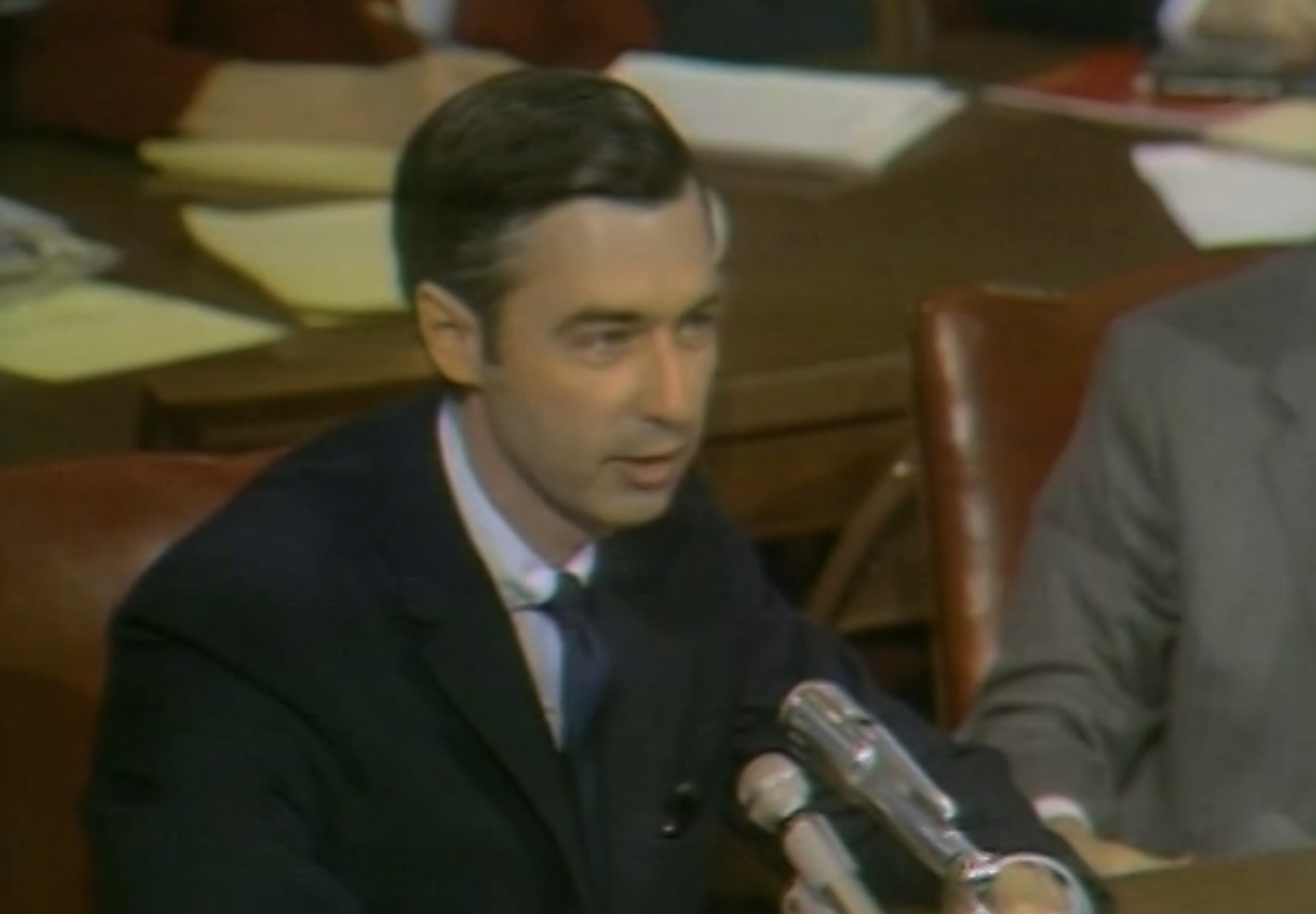
Early in his career, Fred Rogers testified before the Senate Subcommittee on Communications to explain the value of educational programming like Mister Rogers’ Neighborhood. He argued that, in contrast to “animated bombardment,” his program offers children “an expression of care.” While some of the people in the room laughed nervously during his testimony, Fred maintained a calm, even tone that emphasized how seriously he took the proceeding and its outcome. In six short minutes, he not only won over Senator John Pastore, the chair of the Subcommittee, but also secured sustained funding for public broadcasting.
Over the years, his show took memorable positions against war (e.g., the Cold War, the Vietnam War, the Gulf War, the War on Terror) and global poverty and in favor of racial diversity, gender equality, and environmental protection. To a smaller extent, he also attempted to address discrimination against homosexuality.
He participated in cross-cultural exchanges to demonstrate our shared commonalities as global citizens and encouraged us to use our own “divine spark” to better understand those around us. He showed us how to be caring neighbors and help take care of the world around us, including treating animals kindly and being reverential to nature. Whether inviting Officer Clemmons to cool his Black feet in a shared swimming pool to signal his opposition to racial inequality or talking to viewers about violence and grief after the assassinations of Dr. Martin Luther King, Jr. and Robert F. Kennedy, Fred modeled care and resistance in difficult political and social climates.
“As a compassionate human being, Fred Rogers opposed the attitudes, policies, and practices of anyone who built walls between rich and poor, whites and people of color, men and women, gays and straights, people and the natural world—barriers that made individual and social peace impossible.” (Long, 208)
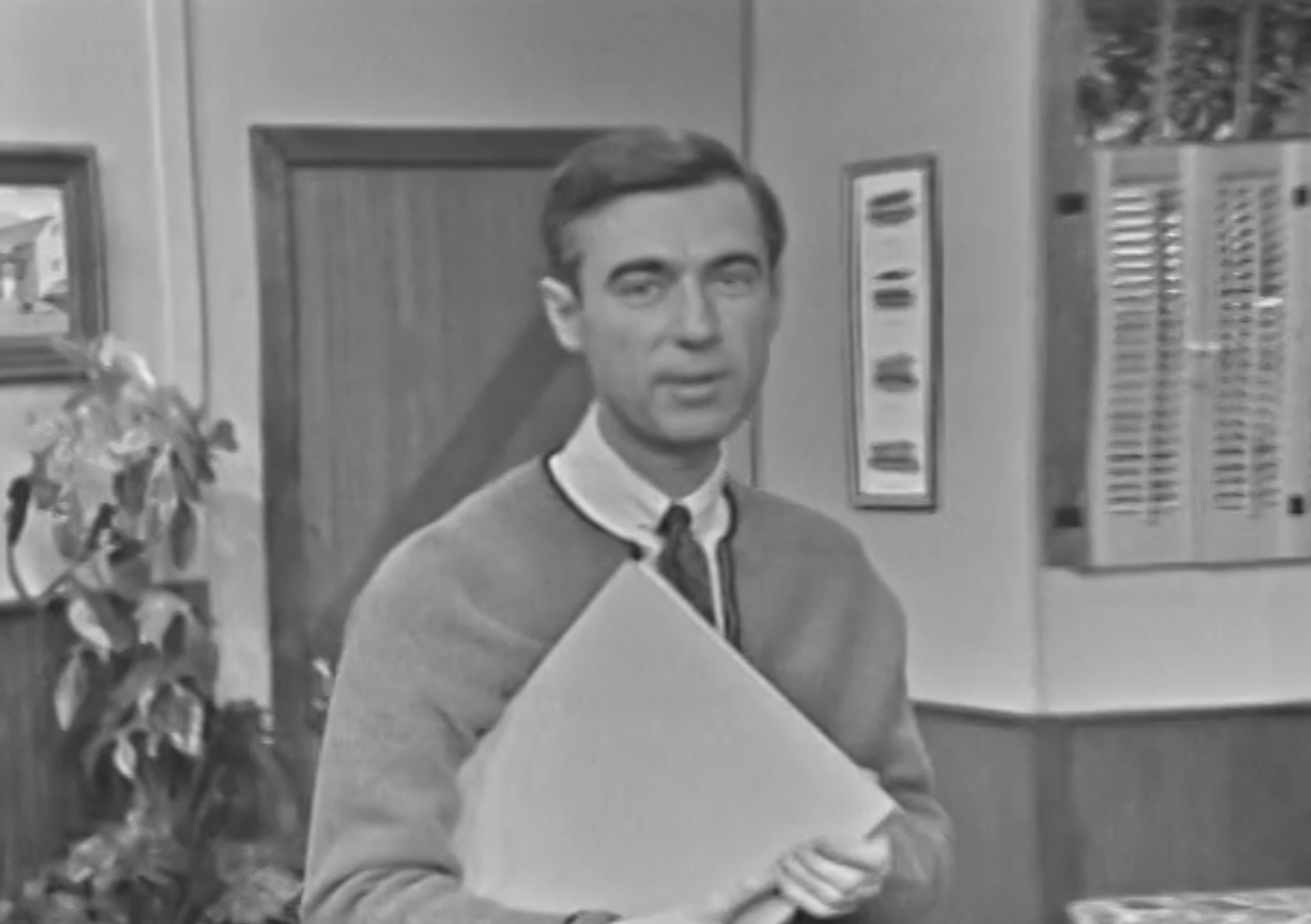
Mister Rogers also imparted ideas related to well-being and mindfulness that I’m finding deeply meaningful these days. Self-acceptance and appreciation for others are key messages that Fred shares time and again, stressing their importance over judgement and criticism.
I Like You As You Are
Lyrics by Josie Carey | Music by Fred Rogers
I like you as you are
Exactly and precisely
I think you turned out nicely
And I like you as you are
I like you as you are
Without a doubt or question
Or even a suggestion
Cause I like you as you are.
I like your disposition
Your facial composition
And with your kind permission
I’ll shout it to a star.
I like you as you are
I wouldn’t want to change you
Or even rearrange you
Not by far.
I like you
I-L-I-K-E-Y-O-U
I like you, yes I do
I like you, Y-O-U
I like you, like you as you are.
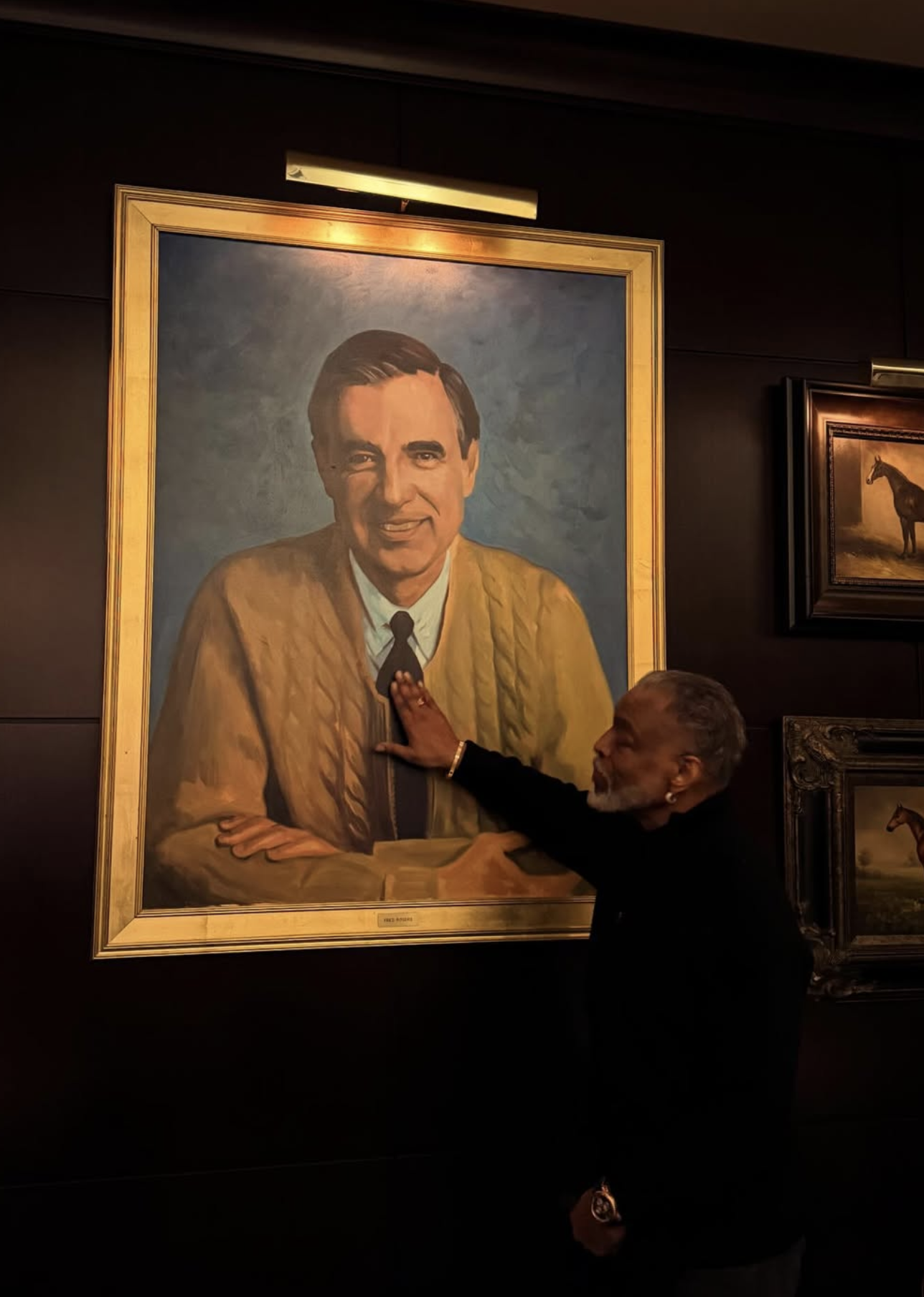
This recent photo posted by LeVar Burton, beloved host of Reading Rainbow from 1983-2006, standing with a portrait of Fred Rogers in Pittsburgh warms my heart. The legacy established by these two PBS program hosts centers storytelling, connection, and the power of imagination. In today's troubling times, it is vital that we stay engaged with these meaningful ways of being.
(As a side note, the podcast LeVar Burton Reads combines nostalgia for listening to stories with introductions to a diverse cast of contemporary writers all within 30-minute stand-alone episodes. Highly recommend!).
While Mister Rogers entered my life as a calm, cardigan-clad television host, his role has expanded over time to include being a model for teaching and social justice advocacy. As I’ve continued to age and ask deeper questions, Fred’s work continues to offer helpful answers. I no longer remember him as a relic of television history, but now see him as a source of hope and inspiration for creating a better tomorrow.
To Learn More:
- Watch the documentary Won’t You Be My Neighbor
- Listen to Johnny Costa Plays Mister Rogers Neighborhood
- Apply to be a member of next year's Educators’ Neighborhood
- Tune into the Fred Rogers Institute’s podcast Listen to the Helpers
- Visit the Heinz History Center exhibit on Mister Rogers’ Neighborhood (I know I’m excited to go!)
- BONUS: Enjoy this PBS crossover episode where Fred meets Julia Child (I’ll have a blog post about her someday, too!). The 1970s recipe for Spaghetti Marco Polo is quite something!