Carson McCullers

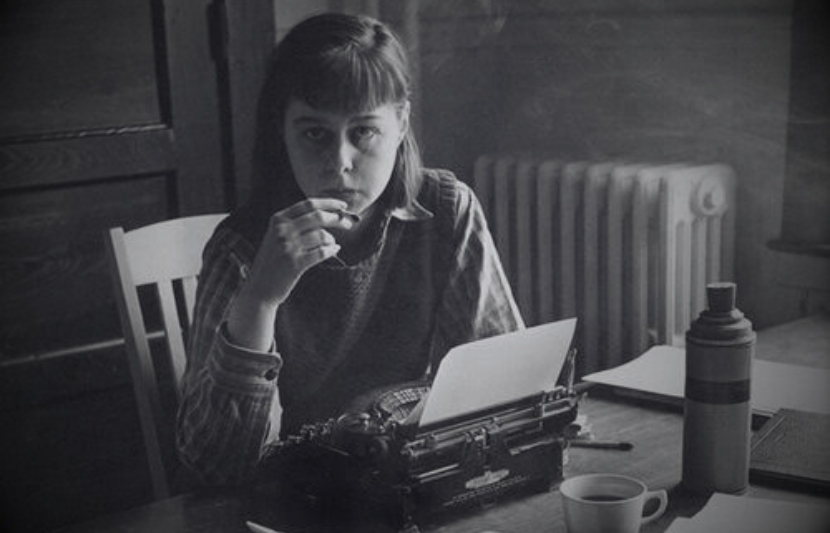
Last fall, my friend Anna and I read Mary Dearborn’s recent biography of Carson McCullers. I had just completed a multi-year grant studying Flannery O’Connor (she’ll get her own blog post soon) and wanted to continue reading about women writers from Georgia. Anna, a Columbus native, happily suggested Carson McCullers (1917-1967). While we were both familiar with Carson’s literary work, Anna’s previous readings of other biographies about Carson as well as her knowledge of the family’s connections in Columbus helped to contextualize and enrich our conversations. In fact, as Dearborn notes, “Columbus would provide the backdrop for all of Carson’s novels, appearing in close-up in some, other times in a wide-angle view.” (Dearborn, 22)
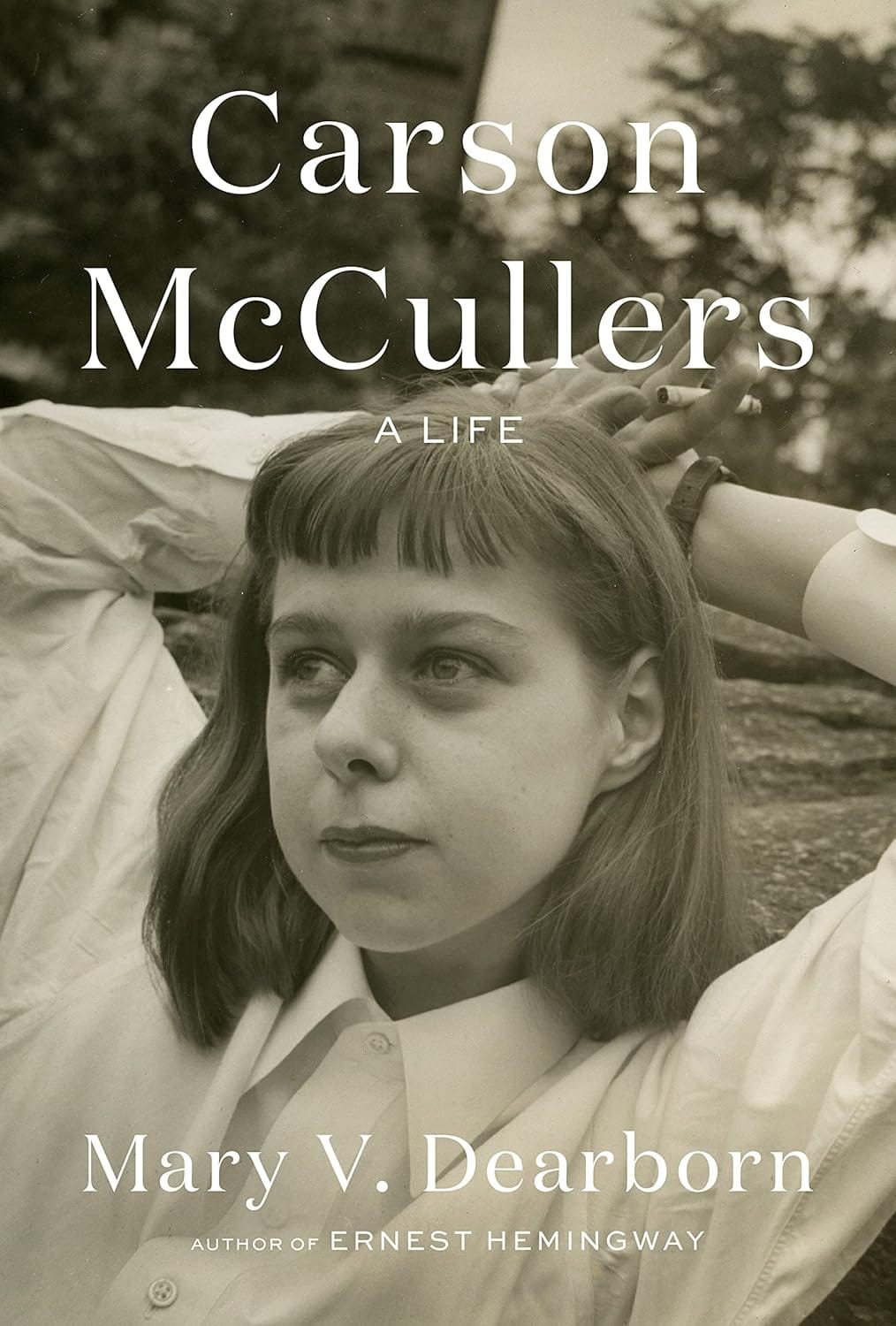
Best known for her books, The Heart Is a Lonely Hunter and The Member of the Wedding, Carson brought memories of her Georgia childhood with her while developing a celebrated literary life in New York. She surrounded herself with the contemporary writers of her time, including Tennessee Williams, W. H. Auden, Isak Dinesen, Richard Wright, and Truman Capote. And yet, many people today do not easily recognize her name or her work.
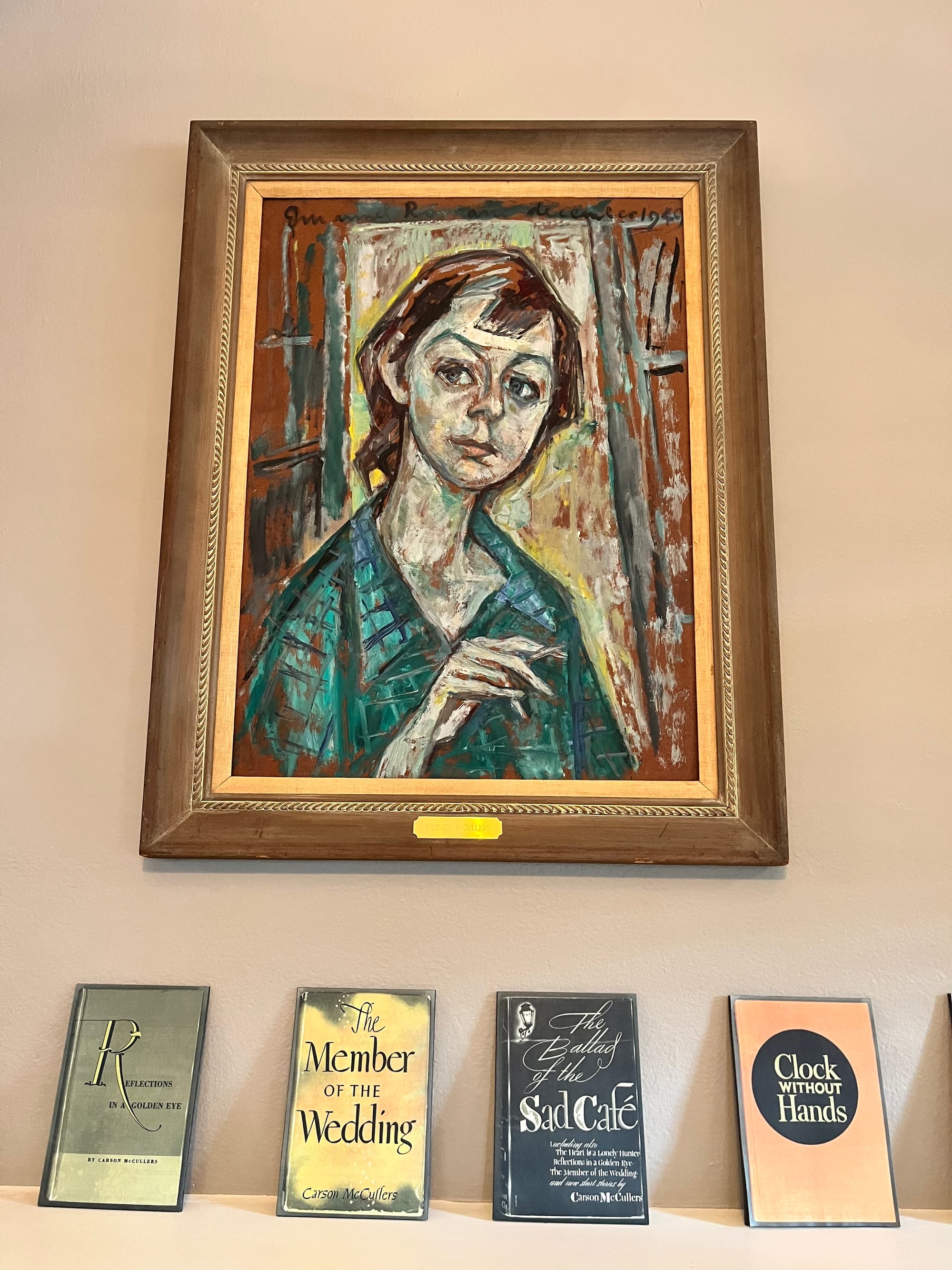
For decades after Carson’s death, Virginia Spencer Carr’s 1975 book, The Lonely Hunter: A Biography of Carson McCullers, guided the public’s perceptions of the author. Carr relied almost exclusively on interviews conducted with Carson’s friends and acquaintances, giving power to Carr and her interviewees to craft a version of Carson’s life that aligned with their own interpretations of her. But recent archival acquisitions by Columbus State University of Carson’s personal papers and therapy transcripts have helped writers like Dearborn and Jenn Shapland reconsider the influence Carson had on the art of writing as well as the fluidity of gender relations she expressed on and off the page.
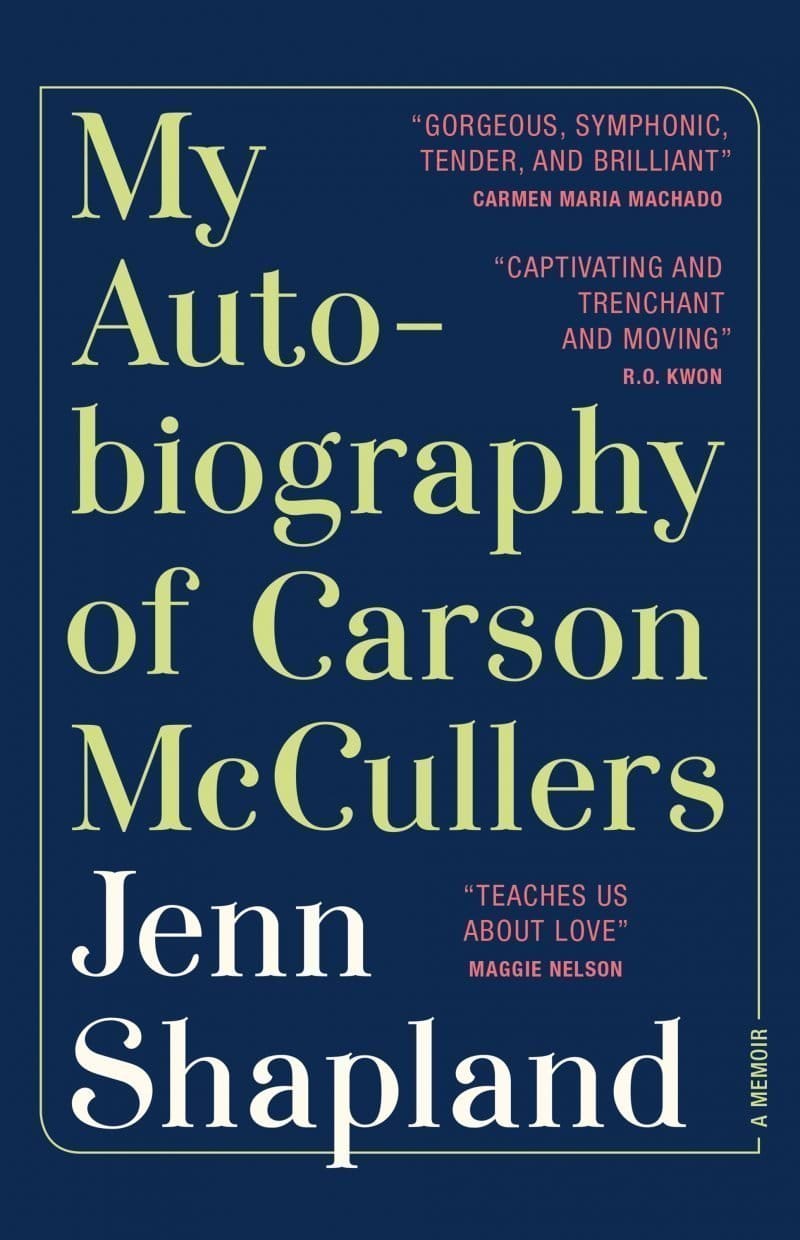
Jenn Shapland’s 2020 book, My Autobiography of Carson McCullers, opens by stating, “Carson McCullers, when she is remembered, is remembered as a novelist who grew up in Columbus, Georgia, moved to New York in her twenties, and spent the rest of her life writing about misfits in the American South.” (Shapland, 3) She goes on to say, “She was often drunk, chronically ill, and, like so many of her era, she died young. If you’ve heard of her, you’ve probably heard some of this version.” (Shapland, 3)
Shapland’s book came across my radar for uniquely combining historical research with personal experience as the author re-interpreted Carson’s story as part of a larger attempt to create meaning in her own life. Taking what Carr left as a blueprint, Shapland spent time sifting through Carson’s papers, writings, and newly acquired therapy sessions in an effort to better understand the complexity of her work. With a writing fellowship from the Carson McCullers Center, she even lived and wrote in Carson’s childhood home on Stark Avenue in Columbus.
It is very rare to have access to historical documents as intimate as therapy transcripts. Doctor-patient conversations are protected by law and can only be divulged with the patient’s permission. Early in her time working with psychiatrist Mary Mercer, Carson realized she felt comfortable sharing very personal details with her doctor. Carson also considered that the insights she gained from their sessions, and the memories that surfaced in their conversations, could be useful someday if she chose to write an autobiography. At Carson’s insistence, Mary reluctantly agreed to record their sessions as long as Carson transcribed them.
Reading through the details that Carson shared with Mary, Shapland started to see that there was more to the connection between these two women than their doctor-patient relationship. Although prohibited at the time from quoting the transcripts, Shapland reflected on the disclosures in her own words:
It is strange to apply the expectations of discovery and evidence to a person’s life, let alone a person’s love life. As I read and researched Carson, I learned that evidence itself is slippery, and discoveries are never final. They shift as more voices, more sources are added to the mix. They shift according to the mood of the biographer or the critic, and according to my own mood, and according to the mood of the weather on the day I’m reading. I didn’t trust the discovery of Carson’s relationship with Mary [Mercer] that I found in the transcripts, in part because I suddenly didn’t trust myself as a reader. If Carson was a lesbian, and if her relationships bore that out, wouldn’t someone already have said so? Wouldn’t it be known beyond rumors in the queer community? (Shapland, 40-41) (emphasis mine)
Shapland argues that Carson’s previous biographers opted to tell “the straight narrative,” one in which her life centered around her unstable marriages with James Reeves McCullers. In this version, Carson sustained “inexplicable crushes on and friendships with women…within the confines of an otherwise ‘normal’ life.” (Shapland, 19)
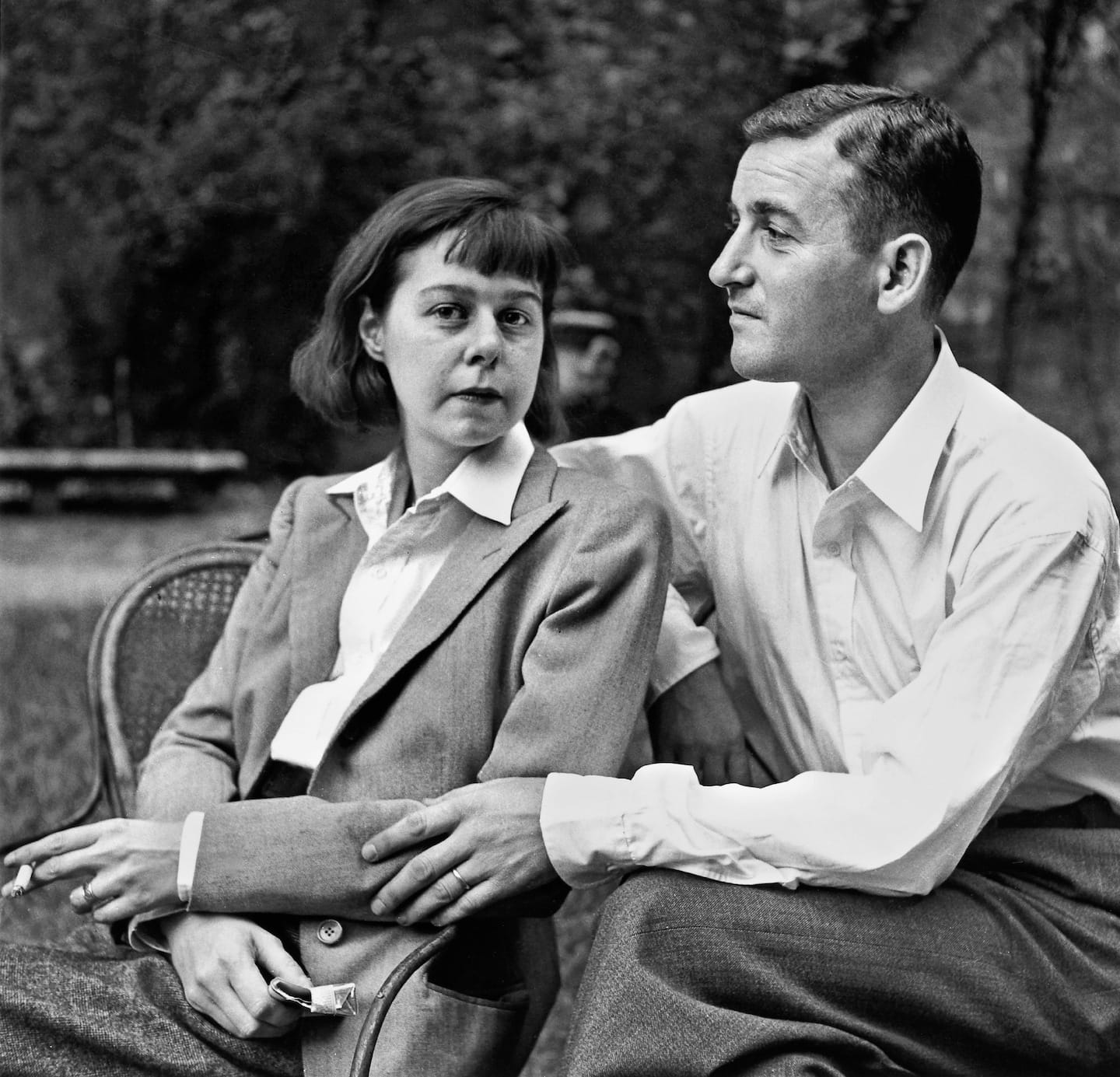
Blending historical documentation with her personal interpretations, Shapland highlighted the changing nature of Carson’s story as more people attempted to tell it. She explains:
Biographers usually seek to fill in gaps, to add narrative to strict chronology, to render a person’s life so that it reads like a nineteenth-century novel. But Carson’s is not an unwritten story. Rather, it is a story that has been written over, revised, and adjusted to suit various people’s needs. The more I read and researched, the more I began to question the versions of her life that exist and continue to circulate. I began to feel that someone–several someones–had put the jigsaw puzzle together all wrong, to form a picture of Carson that didn’t match the one I recognized. First, I had to take the puzzle apart and find all the faulty links. Then I began to reassemble it, a six-year process that took me from Austin, Texas, to Columbus, Georgia, to Sarasota Springs, New York, following leads and trying to fit the pieces together without knowing what the final version–my Carson–would look like. (Shapland, 42)
The idea of creating our own versions of historical figures lays bare what historians, readers, and community/family members do. We’d like to think we know definitively who a person was and what they were like, but in reality, we all bring our own questions, ideas, and access to resources to the table with us.
Mary Dearborn’s book takes Carson’s story even further. Using the same archival sources as Shapland, Dearborn arrived in Columbus a few years later when the archives offered greater freedom to cite the therapy transcripts. As a result, Dearborn’s account offers much more detail about Carson’s personal relationships with women, especially with Annemarie Schwarzenbach and Mary Mercer.
Rather than describing Carson as a woman suffering from unhappy domestic relations with her husband, Dearborn acknowledges that Carson spent more of her time looking for intimate connections outside of her marriage. She writes, “She would repeatedly fall in love with women very much like Annemarie: older, lesbian, dramatic, elegant, and attractive, exuding worldliness and sophistication and generally unattainable, usually because the beloved was involved with another.” (Dearborn, 94) And as she made her way through different social circles, “Time and again, the inexperienced young woman from the small-town South would fail to engage the worldly older woman in a grand passion, try as she might.” (Dearborn, 94)
This clarification is important because it helps connect the sense of loneliness, isolation, and unrequited love present in Carson’s own life experiences with the heartbreak, sense of injustice, and bleakness that pervade many of her stories. Carson’s queerness gave her the insight she needed to write stories that captured the outsiders she knew well. As Dearborn notes, “the Southern Gothic strain gave misfit artists like Carson the freedom to write about all kinds of taboo subjects, usually race but also homosexuality and any other topic deemed freakish, often with great sympathy, and even to make them the stuff of fine literature, as long as no one–the writer, her characters, or the critics–directly named the taboo. The refusal to do so was part of what made the whole enterprise gothic, in fact.” (Dearborn, 150)
When Carson was introduced to Mary Mercer in 1958, she finally found a companion that loved and cared for her reciprocally. While they worked together as psychiatrist and patient for a year, Carson shared her most intimate thoughts and feelings. This not only helped Carson work through her sadness and document her life story, it also brought the two women closer together. Mary stopped working as Carson’s doctor in 1959 and they began a more romantic relationship.
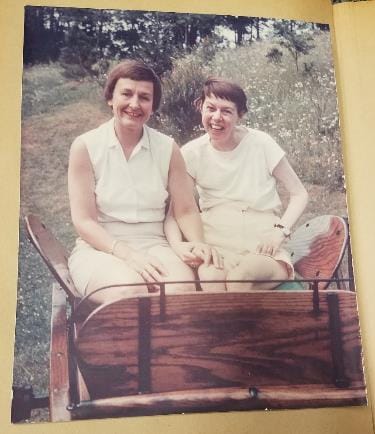
Over the next eight years, which turned out to be the final stage of Carson’s life, Dearborn records, “Three things gave her a modicum of happiness: food (she loved to talk about it but no so much to eat it), drink (alcohol, which, along with tranquilizers, blunted her affect and kept her desires simple), and physical contact (physical closeness with Mary, whether erotic or not).” (Dearborn, 398).
After a series of debilitating strokes, Carson died in September 1967 at the age of fifty. She had written several chapters of her autobiography, which was published thirty years later as the unfinished manuscript, Illumination and Night Glare. Critics claimed it was “devious,” “detached,” “hurried,” and “unpolished.”
Mary guarded Carson’s papers and therapy recordings/transcripts closely during the rest of her own life, arguing that “anything else would constitute a violation of doctor-patient confidentiality.” (Dearborn, 413). It was only with Mary’s death in 2013 that all of Carson’s papers, including the transcripts, were donated to the Columbus State University Archives.
Spending time with the biographies and stories of Carson McCullers helped to inform my perspective on what we choose to remember and how it evolves over time. Carson's decision to record and transcribe her therapy sessions demonstrates her determination to shape how she wanted to be remembered. She created historical artifacts, preserved lovingly by her partner Mary, and now interpreted for the public as evidence of her personal relationships with women. This disclosure helps connect her personal struggles more directly with her storytelling. It offers a more nuanced interpretation of her point of view and makes the case for re-examining her writings with a different lens. Overall, Carson’s evolution in literary memory serves as a meaningful example of the power that biographers, critics, and society hold, as well as the agency we all have in shaping how we want to be remembered.
To Learn More:
- Watch Claudia Müller’s 2025 documentary Wunderkind Carson McCullers.
- Read Carson's 1943 short story The Ballad of the Sad Cafe.
- Visit the Smith-McCullers House in Columbus, GA.
- Apply for a writing residency in the Smith-McCullers house through the The Marguerite and Lamar Smith Fellowship for Writers.